Rescuers in Phoenix Are Using Mobile Cold Plunges to Save Overheated Hikers
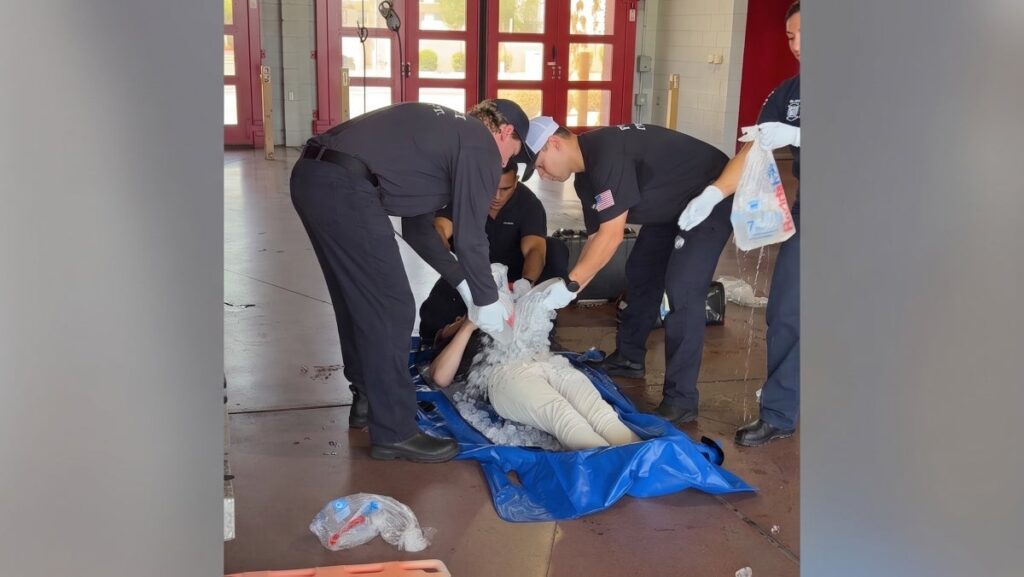
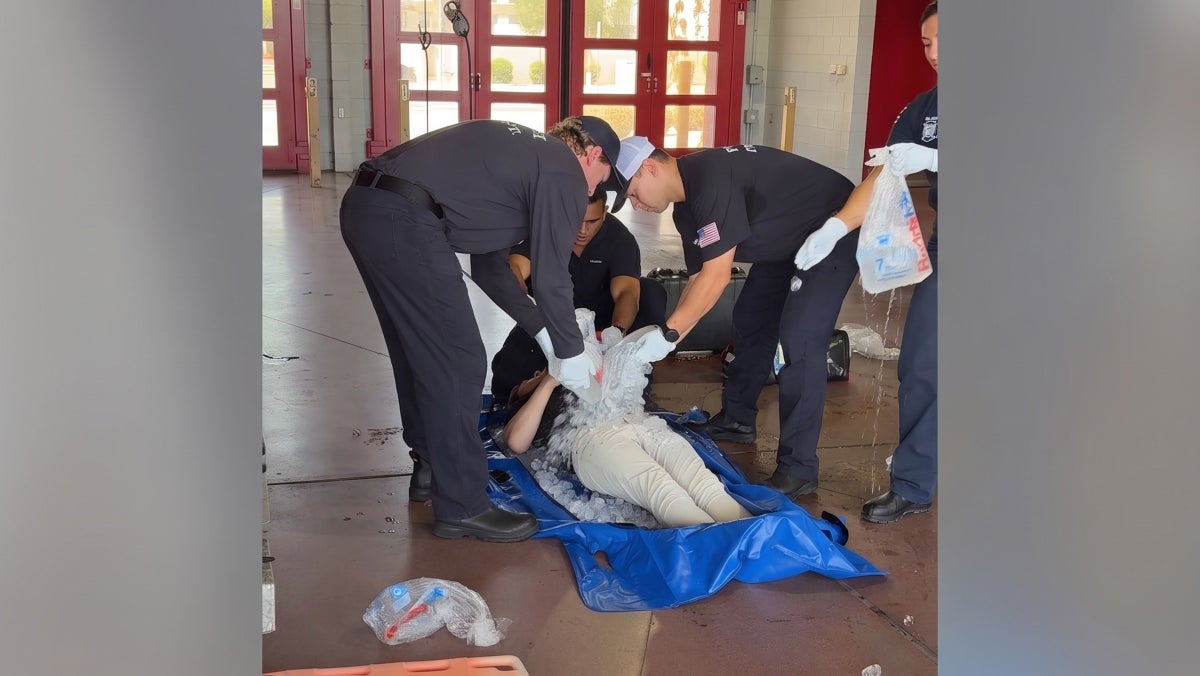
Move over, Wim Hof. Rescuers in Phoenix, Arizona, are using mobile cold plunges to save overheated hikers when temperatures soar. And now, members of the Phoenix Fire Department make sure to bring the devices—which look like a cross between a plastic tarp and a sleeping bag—along to every call in the spring and summer.
“We used to put ice packs into people’s armpits and groin areas, but we realized it wasn’t cooling them down quickly enough,” said Mike Johnson, a captain with the Phoenix Fire Department. “When a person’s temperature is that high, only a cold immersion will work.”
Thanks in no small part to Hof and his popular YouTube video series, cold plunges have, in recent years, become a cure-all for a wide range of maladies, from depression and anxiety to insomnia, as well as a useful tool to soothe sore muscles. Perhaps overlooked in the contemporary buzz is that diving into a pool of ice water is the best way to stave off heat stroke.
The National Library of Medicine has published multiple research papers on the benefits of cold plunges when treating patients with hyperthermia. One report refers to cold plunges as the “gold standard for exertional heatstroke treatment.”
“The quicker someone with heatstroke receives cold water immersion, the less risk of death and organ damage,” writes a report on the Mayo Clinic.
The Phoenix Fire Department’s mobile cold plunge likely saved the life of a hiker at the popular Camelback Mountain in the Phoenix Mountains Preserve on Sunday, August 16. Authorities responded to a distress call at 11 A.M. and sped to the Echo Canyon Trailhead on the north end of the preserve. Midway up the trail they located a woman who was overheated and unable to descend to safety.
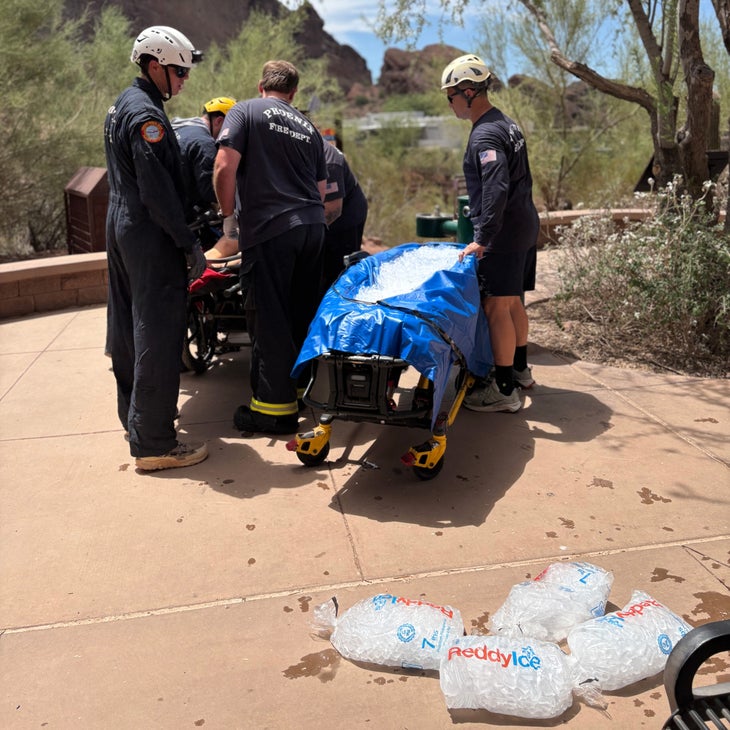
Crews called a helicopter and hoisted the woman off of the peak and down to the trailhead. According to a Facebook post, crews then placed her into the bag, and then filled it with ice and water. They later took her to a nearby hospital.
Johnson said a patient must show two primary symptoms before being treated with the cold plunge: a core body temperature at or above 104 degrees Fahrenheit, and exhibit signs of an “altered state.”
If a patient checks both boxes—which the woman did on August 17—rescuers immediately get out the mobile cold plunge. The device folds down to the size of a small tablecloth, Johnson said, and can be easily stored in a fire truck or ambulance. Crews unfold and then unzip the bag, and then fill it with ice. They put a patient inside and then add water.
“We monitor their temperature when we have them in it,” he said. “We’ve had some really great success with it. It cools their internal body temperature extremely quickly.”
The idea to invest in the technology came from a member of the department who had seen similar devices employed by the U.S. military. In 2024 the department tried the devices out on a trial basis. After a few successful saves, Johnson said, the department trained its crews to use them permanently.
Now, the devices are as commonplace as a First Aid kit.
“This time of year we take them out on pretty much every call,” he said. “It might be an unknown medical event, but if it comes in and they’re having a heat-related emergency, we can quickly get their body temperature down.”
The post Rescuers in Phoenix Are Using Mobile Cold Plunges to Save Overheated Hikers appeared first on Outside Online.
About The Author