Marmots Are Having a Moment and I’m Here for It
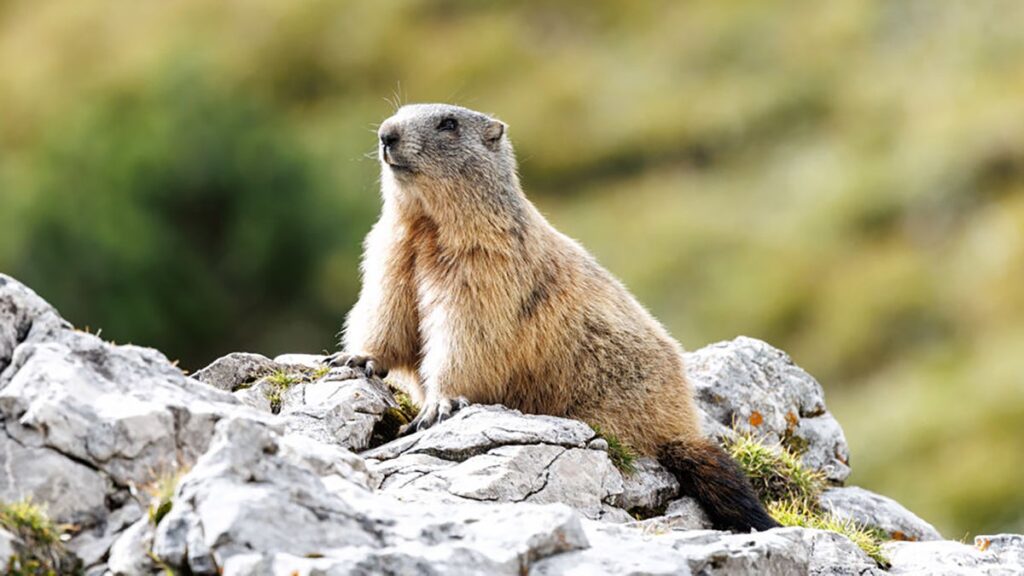
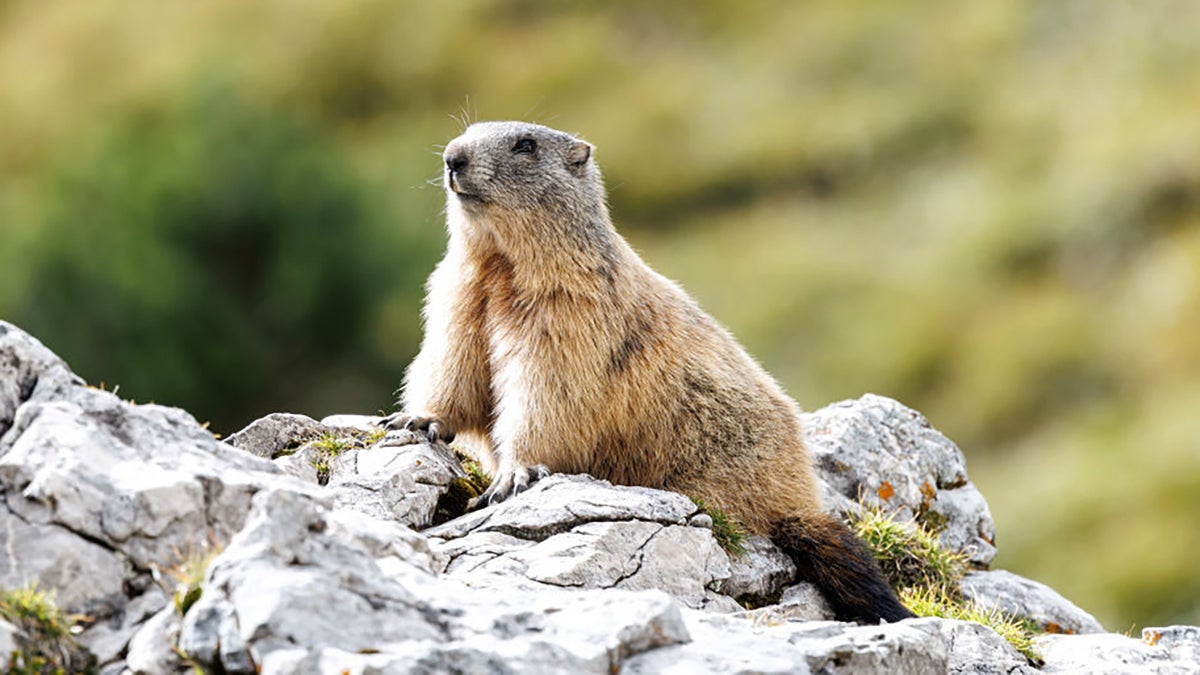
What’s chubby, hairy, and likes to lick rocks?
No—it’s not a typical Pacific Crest Trail thru-hiker. I’m of course referring to a marmot, the cute and cuddly high-alpine critter that’s currently taking the internet by storm.
Marmots are having a moment, and I couldn’t be happier. If you’re like me, then your social media algorithm this month has overflowed with adorable marmot content.
My personal marmot deep dive began in mid-August when an outdoor influencer named Jared Shult posted this video of a particularly charismatic marmot at Mount Rainier National Park hugging his leg. Shult recorded himself petting and stroking the marmot, and was subsequently fined $230 for doing so. National Park Service rules specifically prohibit visitors from touching wild animals—even the cute ones. Oops!
Shult’s video had auspicious timing, as it hit social media just before Colorado’s inaugural Fat Marmot Week, a highly entertaining online contest operated by the Rocky Mountain Biological Laboratory’s (RMBL) Marmot Project. Much like Fat Bear Week, the RMBL, which studies marmots outside of Crested Butte, Colorado, asked fans to vote between eight yellow-bellied marmots who were trying to gain the most weight before winter.
The winner, a particularly chonky marmot named Dawn, gained 4.5 pounds (about half his body weight) over the summer.
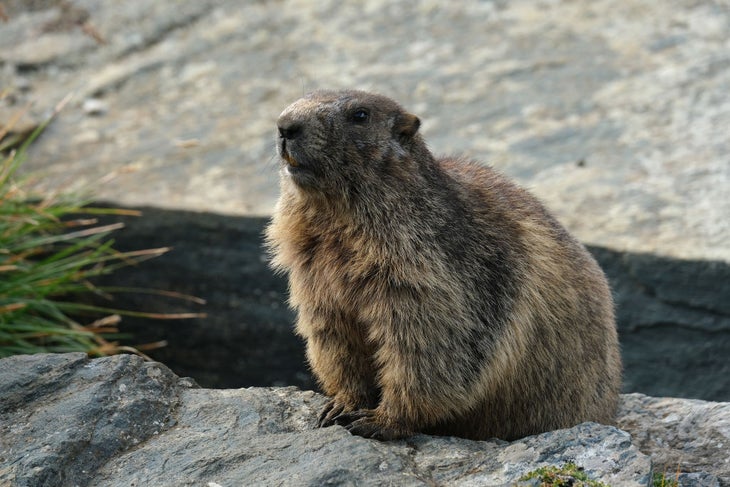
Between Shult’s video and Fat Marmot Week, I’ve now consumed a vast array of marmot content. Marmots licking GoPro cameras. Marmots hugging. Marmots munching on rocks? I have awww‘d and ohhhh’d my way through all of the video clips showing these sentient stuffed animals doing cute little human things with their paws.
I also learned that, like all critters, marmots are undomesticated wild animals driven by instincts and hunger, and, if given the chance, they may ruin your afternoon. The Wall Street Journal published a story accusing marmots of “terrorizing” guests in California’s Sequoia National Park by licking hikers, stealing their shoes, and occasionally breaking into their vehicles. The WSJ reporters also point out that marmots will sometimes crawl into the engine compartments of a parked car and devour cables, wires and hoses.
My newfound marmot interest left me with more questions than answers. So, I recently sought some info from the global expert on the critters: Professor Daniel Blumstein of the Department of Ecology and Evolutionary Biology at the University of California, Los Angeles. Blumstein also oversees the Marmot Project at the RMBL, and spends his summers studying the cuddly critters near Gothic, Colorado. Here are some takeaways I got from our correspondence.
Marmots Are Curious
OK, so that marmot didn’t crawl into the engine compartment of your Dodge Stratus looking to strand you at the trailhead parking lot. The critter was just really inquisitive—one of the familiar traits of the species, Blumstein told me. It’s the same reason why that marmot went up to Shult in Mount Rainier National Park. It wanted food. It wasn’t afraid. And, by nature, it wanted to investigate the situation.
Alas, this curiosity can sometimes get marmots in trouble. Blumstein has seen marmots crawl into cars in Colorado and then go for an unplanned adventure.
“One made it to the Phoenix area a few years ago and had to be flown back,” he said. “Once in a car, havoc sometimes results.”
Marmots Want Salt
Those videos of marmots licking boulders and chewing pebbles are pretty weird, right? Well, it turns out the critters are on a lifelong quest to consume salt. A marmot’s normal diet of grasses and meadows that grow in alpine tundra leaves them salt-deficient, so they seek the stuff out wherever they can. Sometimes that means licking mineralized salt out of rocks.
Blumstein believes that may also explain why some marmots venture into cars.
“I’m told that radiator fluid tastes salty to animals,” he said. “It’s also possible that radiator hoses taste good to them!”
Marmots Die When the Snowpack Is Thin
This year the RMBL experienced a tragic die-off of marmots—the biggest since scientists started studying them outside of Crested Butte. Of the 160 marmots the group was studying, 100 died during the winter of 2025-26.
This die-off corresponded with Colorado’s thinnest snowpack in more than 40 years. Blumstein and his team know that the die-off and dismal snow levels are related. Like many mountain mammals, marmots hibernate over the winter. And sometimes, many of the marmots that go to sleep in the fall never wake up in the spring.
“Snow is insulation, so the snowpack acts as a blanket to keep the marmots warm over the winter,” he said. “It’s possible that those who were more likely to die were colder this year because they had less of a snowpack covering them.”
They Also Die When the Snowpack Is Too Thick
Alas, the life of a marmot is full of dangers and pitfalls. Too deep of a snowpack can also spell certain doom for a marmot. They may starve to death while waiting for the melting snow to unearth the grass and flowers. Or, predators can pick them off while digging out of their burrows.
“We’ve seen both happen in heavy snow years,” Blumstein added.
Hibernating Is a Superpower
Perhaps my favorite marmot fact involves the long sleep that the critters take during the winter. Like bears, marmots must fatten up in the late summer and fall to build up fat storage for the winter. But a marmot’s body is a miracle of efficiency once it is inactive. Yellow-bellied marmots will burn just a paperclip’s weight of fat a day when they’re hibernating. And during this time, Blumstein said, the marmot is not physiologically aging.
“Hibernation is a secret to longevity,” Blumstein said. “Except that to live longer you have to miss ski season.”
Even Scientists Think They Are Cute
Blumstein’s favorite marmot trait is that the same individual critters generally return to the same trailheads, mountain meadows, and rocky slopes year after year. So, should the marmot that hugged Shult survive the cruel winter, he will probably be back at Mount Rainier to hug guests in 2027 and beyond. Just reminding everyone—don’t hug him back.
For those of us who are drawn in by their cuddly ways, just know that even researchers feel the same way.
“Plus, they look like little buddhas,” Blumstein added.
The post Marmots Are Having a Moment and I’m Here for It appeared first on Outside Online.
About The Author