“Bison Belong on This Landscape.” Judge Blocks Federal Order to Remove 1,000 Animals in Montana
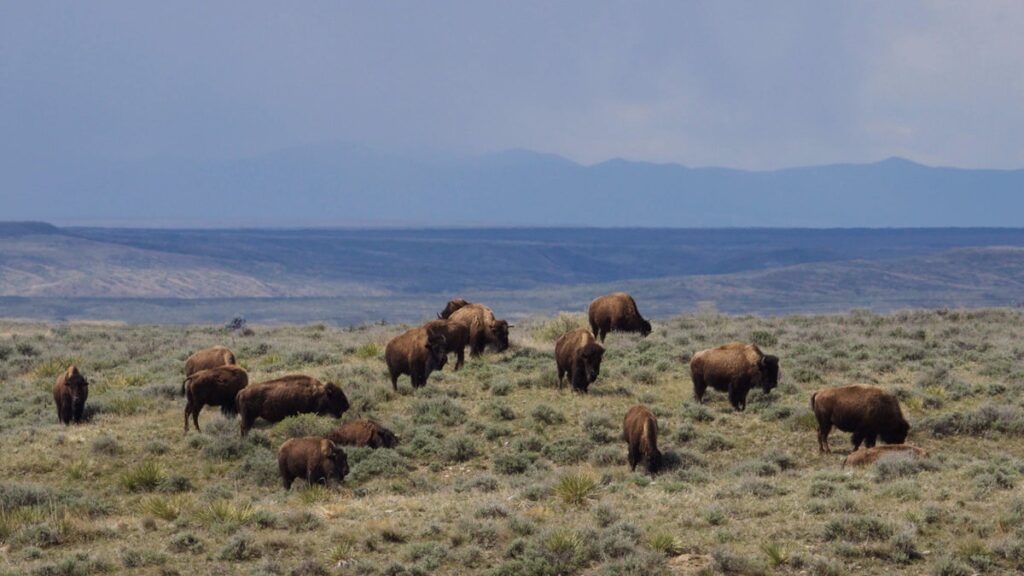
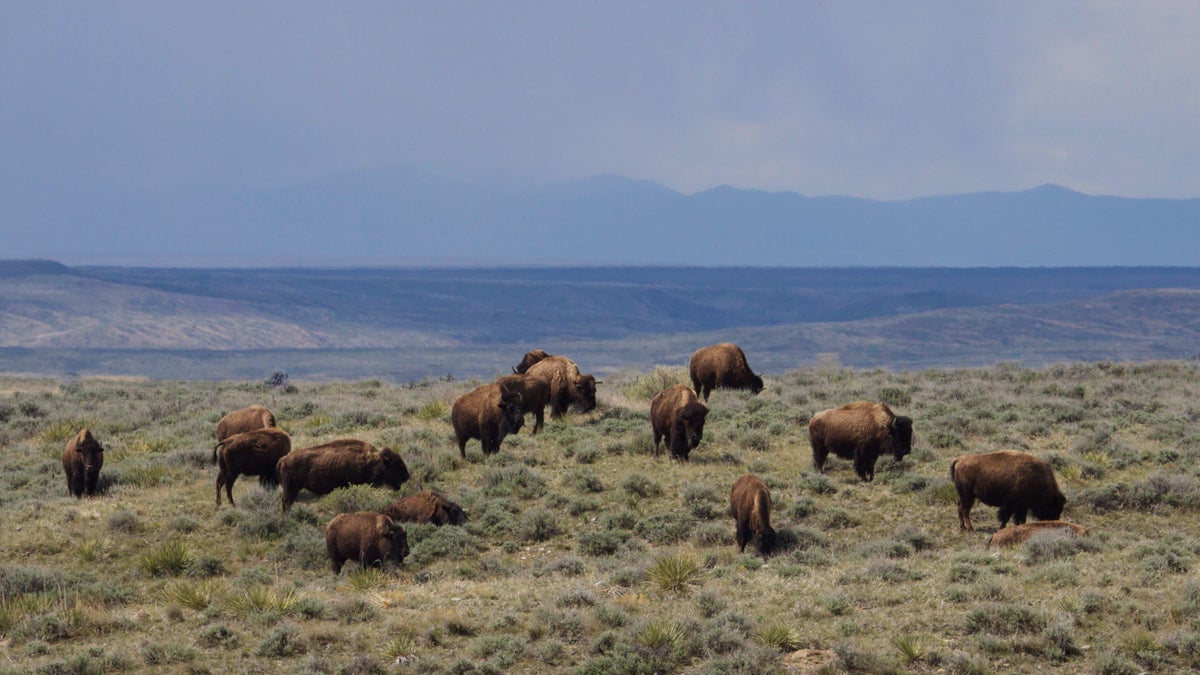
Nearly 1,000 bison that faced removal from federal land in Montana will be able to continue grazing for now after a judge blocked a Bureau of Land Management (BLM) order seeking to kick the animals out.
The lawsuit stems from a BLM order this May that sought to remove the bison from public portions of American Prairie. The nonprofit preserve covers more than 600,000 acres of private land and public grazing leases on Montana’s shortgrass prairie, all of it open to the public, and features camping, wildlife-watching, and hiking.
The BLM granted the permits for the animals to graze in 2005. Its new order is rooted in a reinterpretation of the Taylor Grazing Act, which allows the department to issue livestock permits for public grazing. The rewrite seeks to reclassify livestock as “production-oriented.”
U.S. District Court Judge Brian Morris objected.
“No statutory language or judicial precedent exists that requires a livestock operation to focus exclusively on production and entirely ignore conservation, range improvement, preservation, or other values,” he stated in the decision. “Congress recognized livestock grazing and livestock management often includes and considers preservation, improvement, and thoughtful development, hand-in-hand with other uses.”
The bison will now remain on American Prairie’s leases while the lawsuit proceeds. The decision will delay the BLM’s original removal order, scheduled for September 30. If that order had taken effect, the preserve would have needed to either cull or remove hundreds of bison from the land, as Beth Saboe, American Prairie’s director of public relations, told Backpacker in May 2026 shortly after the BLM announced the changes.
“Worst-case scenario, we potentially would have to get rid of hundreds of animals. We don’t want to see that happen,” Saboe said at the time, adding that the organization planned to appeal any adverse final decision.
Besides incurring major costs to American Prairie, Saboe said removing the bison from the public range would have stripped a restorative species of its native habitat. The uncertainty around the herd also led American Prairie to cancel its public bison harvest for 2026.
While the permit revocation had support from the Montana Stockgrowers Association and many local ranchers, American Prairie’s tribal partners pushed back. In a January 2026 letter to the Secretary of the Interior, J. Garret Renville, chairman of the Coalition of Large Tribes and Sisseton-Wahpeton Oyate of the Lake Traverse Reservation, wrote that American Prairie had provided animals to and worked with a number of tribes attempting to grow their own herds, and that the organization’s methods of raising bison were “largely indistinguishable from the practices and techniques employed by tribal herd managers.”
In his ruling, Morris wrote that he “struggle[d] to see” how the BLM’s choice to impose the new regulation while ignoring American Prairie’s evidence could be consistent with the law.
With its redefinition, the BLM sought to limit grazing to animals “used as part of an operation to provide output for various purposes, such as meat, milk, fiber, or other products and any animals when they are being used to assist with management of other animals in connection with such operations (e.g. horses that are used to assist with cattle management).”
The BLM itself concluded in 2022 that bison grazing would improve rangeland productivity and riparian health on the same lands it now seeks to remove the animals from.
If American Prairie ultimately loses the right to graze bison on its leases, it could choose to replace them with cattle. There’s evidence that could compromise the land: Cattle herds often heavily graze one small area before moving on. Bison, on the other hand, tend to graze more gradually while constantly moving over the landscape, covering up to 2-3 miles per day. Studies have shown this can increase biodiversity and even drought tolerance on native grasslands.
“These are the ungulates that evolved with the prairie landscape,” Saboe said in May. “They’re one of the main keystone species here, and that’s because of how their presence on the landscape improves the rangeland.”
The court’s preliminary injunction covers the three federal allotments where American Prairie bison are currently grazing. It did not grant the organization’s request to protect three other tracts where bison do not already graze.
“Bison belong on this landscape, and today’s ruling gives them a chance to stay,” said Alison Fox, CEO of American Prairie. “For more than 20 years, our bison have grazed these lands under federal authorization and without grazing violations. The court recognized the concrete harm that removing them would cause, not just to our work, but to our Tribal partners and the broader effort to return bison to their native home.”
The post “Bison Belong on This Landscape.” Judge Blocks Federal Order to Remove 1,000 Animals in Montana appeared first on Outside Online.
About The Author