We Talked to the Creators of ‘Wildwood’ About Why Real Forests Make the Best Fantasy
What makes a forest enchanted? The forest should be lush and beautiful, improbable, and filled with wild things. It should evoke a sense of wonder, prompting you to slow your pace and pay attention to unfurling ferns and towering trees. You may discover that your mind meanders along with your body, making room for the fresh sort of silence that only exists in the woods. You might also find yourself looking over your shoulder every now and then, just to be sure.
In both fantasy and reality, Forest Park in Portland, Oregon, fits the description.
The 52-acre forest on the west side of Portland is a simulacrum of wilderness in the middle of the city. For Colin Meloy, frontman of the band the Decemberists and author of Wildwood—a cultish middle-grade series that’s basically required reading in the PNW—there was no need to invent some faraway land. Portland, and more specifically Forest Park, was a setting just magical enough.
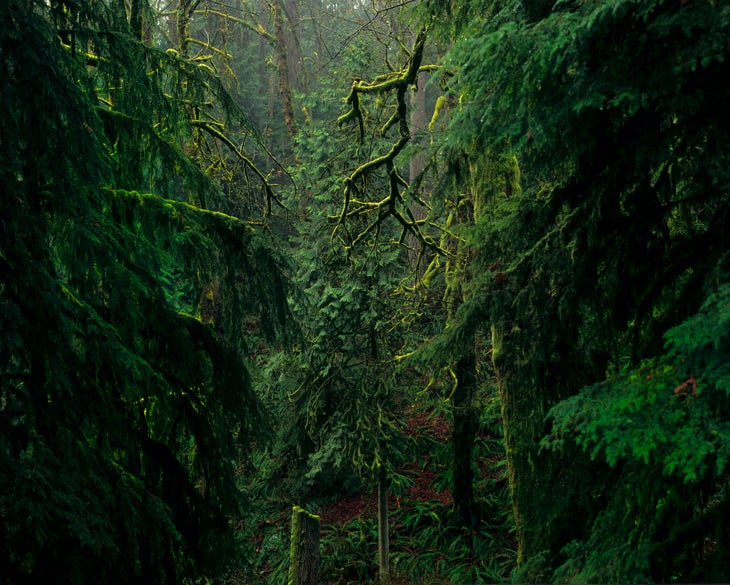
When I visited Portland for the first time in 2015, I stepped into Forest Park with a sense of awe. The park made no sense. I had been in the grungy, forever-1990s streets of downtown moments ago, and now I was…where exactly? Hiking a trail overlooking canyons of ferns, small creeks, lush green so dense it’s nearly suffocating until you take a giant inhale and say thank you?
Later, I moved to Portland in 2023 and walked to Powell’s Books on Hawthorne and bought a copy of Wildwood. It felt like a rite of passage.
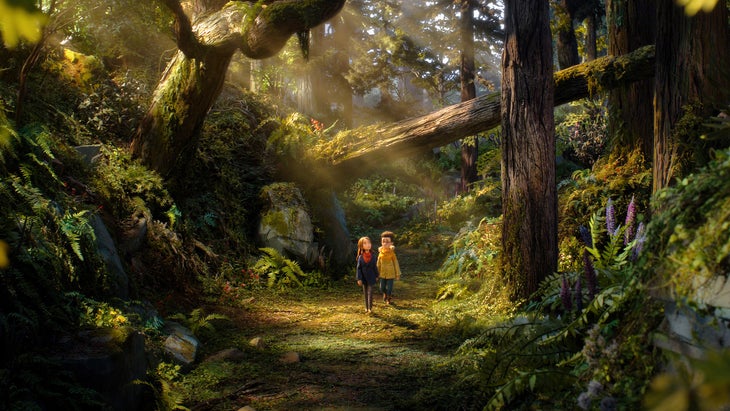
Wildwood follows Portland teen Prue as she enters the Impassable Wilderness—the story’s reimagining of Forest Park—to rescue her baby brother after he is abducted by a murder of crows. Now, with Portland-based stop-motion studio LAIKA’s release of Wildwood on October 23, audiences are given a virtual pass to the forest—and, in turn, to the weird wilds of the PNW.
We talked to author Meloy, illustrator Carson Ellis, and LAIKA production designer Nelson Lowry about the book, film, and seeing familiar spaces with new eyes.
The Magic of Real Places
Meloy’s appreciation of what he calls “mythogeography”—mapping stories and ideas onto an existing place—began when he was a kid.
“Growing up in Montana, I remember going out into the woods in our backyard, or into the mountains, and being like, ‘Oh my god, there’s nobody here,’” he says. “‘I can populate this area. Me and my friends, we can create whatever landscape, whatever country, whatever stories we want to in this place.’”
When he and illustrator of the Wildwood books, Caron Ellis (who also happens to be Meloy’s wife), began working on the series in the 2000s, the couple was living in the Forest Park neighborhood and spent a lot of time walking the area trails. The surrounding landscape, along with Celtic, British, and Scottish mythology, inspired the story.
“When you fly over Portland in an airplane, and you see Forest Park, it looks enchanted, because it’s surrounded by such dense human development,” says Ellis. “Like, what’s going on in that giant forest in the middle of a city?” Meloy adds that the park feels wild and unspoiled, despite the fact that it, like many forests in Oregon, was clear-cut less than a century ago
Setting a story in a real place, and then sharing that story, also offers an additional layer of meaning for the people who live there. Pittock Mansion, a real historic home with trails that connect to Forest Park, serves in Wildwood as a government building for the creatures of the South Wood. Portlanders can stand in the playground where Prue’s baby brother is taken and look across the river at the mysterious urban wilderness, joining the Ellis in wondering WTF is going on in there.
And recently, that wonder has bled out into real life. LAIKA’s promotion of Wildwood has consisted of 30 large, hand-painted crows perched throughout the city, copies of the book (and tickets to the movie) tucked in neighborhood Little Free Libraries, themed hikes through Forest Park, partnerships with popular area businesses like Voodoo Donuts, Powell’s Books, and Stumptown Coffee (I can vouch for Prue’s Blackberry Maple Fog Latte), and more.
I have friends who are reading the book to each other at night, others who have tickets to the midnight showing. The giant cloud of crows that swirls around the city at sunset before nesting downtown comes with a new sort of significance. All around Portland, already known for its whimsy, the community is celebrating this modern mythos.
Let’s Go to the Park
Wildwood’s title comes from the Wildwood Trail, the longest urban forest trail in the country. Wildwood spans 30.2 miles and the entire length of Forest Park, from a trailhead on Newberry Road all the way to Washington Park. On any given day, you’ll find runners, hikers, and casual wanderers enjoying the metropolitan woods.
You may also cross paths with LAIKA and Wildwood production designer Nelson Lowry. He lives in Linnton, just below Forest Park and near St. John’s Bridge (another visual landmark of the book and film).
“Forest Park is literally like my backyard,” he says, adding that this is the first time he’s ever designed a film that takes place where he lives. “I had great access to the reference. I just went up into the woods a lot.”
LAIKA’s interpretation of Wildwood takes the story beyond the Impassable Wilderness to include other iconic outdoor spaces throughout Oregon. A flight atop a giant eagle takes Prue past the Painted Hills, Haystack Rock, Mount Hood, the Columbia River Gorge, and more. But the heart of the story (and the bulk of the visuals) remains in the woods.
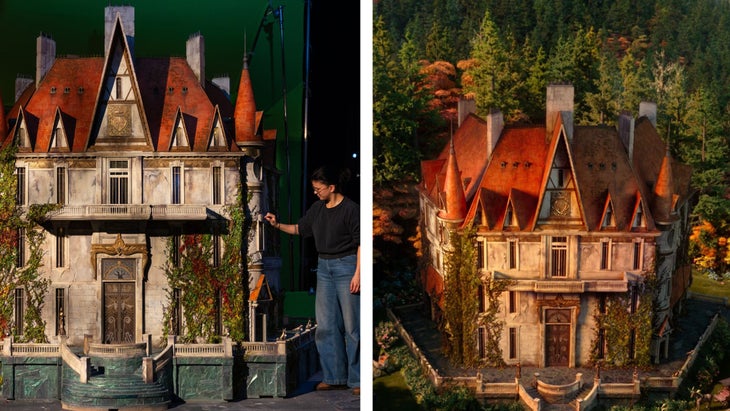
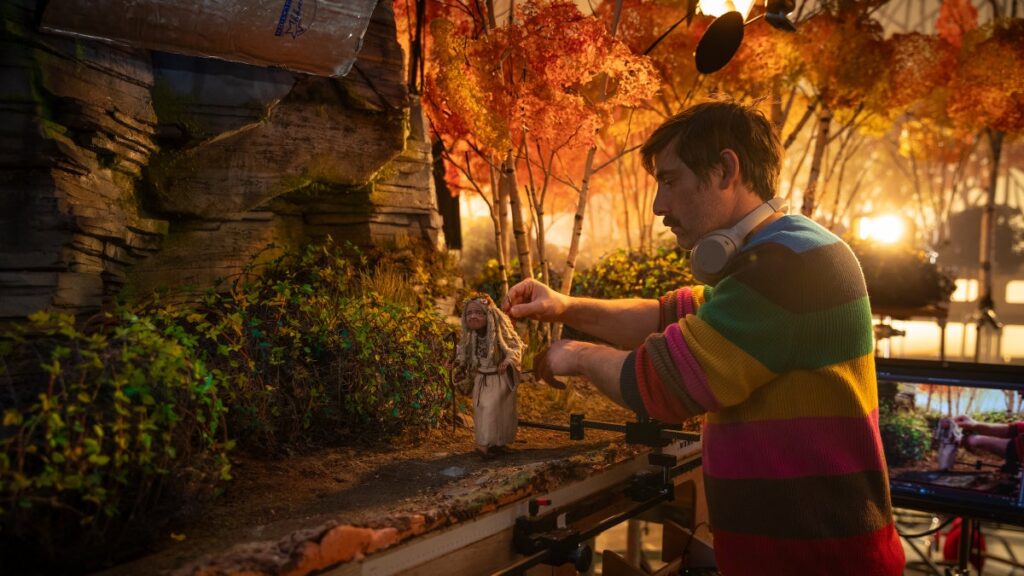
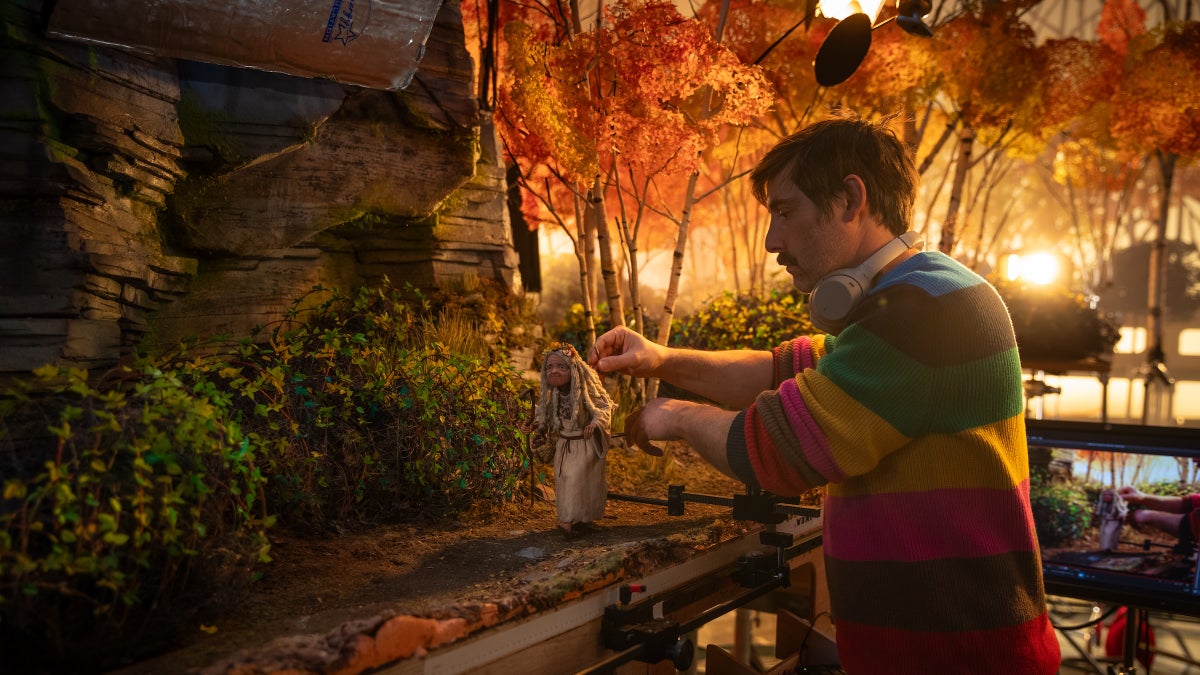
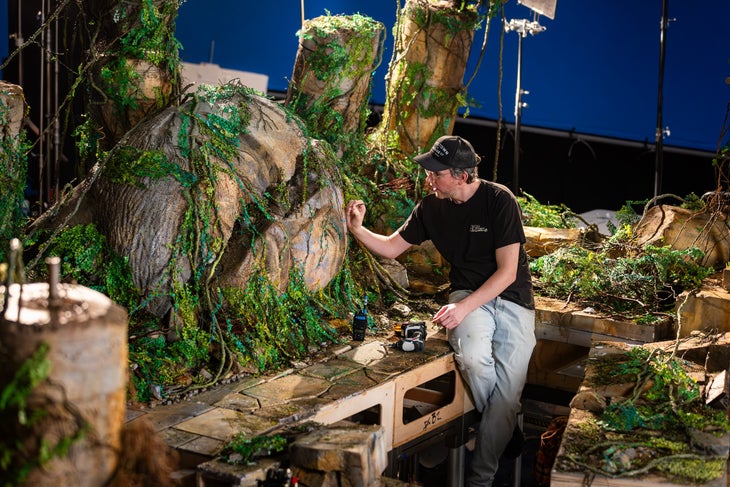
The forest animations throughout LAIKA’s Wildwood are breathtaking to begin with, mind-boggling when you remember that the landscape was created largely by hand. Lowry says that building a stop-motion version of the woods is notoriously difficult, not so much in terms of making it look beautiful, but in capturing the feeling of a forest.
To keep the woods from falling flat, Lowry created a topography that represents the centuries of detritus that make up a forest floor. The team laid sonotubes to represent fallen trees, added chunks of material, and covered everything with a blanket to help envision the shapes of a natural landscape.
“The woods really feel like they were there before us in the film, and they’ll be there after,” he says. “There’s a history to them. I’m super proud of that.”
The meticulously rendered trees and plants are representative of Oregon’s native flora, which Lowry studied throughout the film’s creation. The movie’s Elder Tree is modeled after a real oak near Lowry’s home.
But even with countless hours clocked in the Forest Park, Lowry says that he keeps finding surprises there. “I think that’s one of the wonderful things about nature,” he says. “When you do a hike, go somewhere and come back again, you’re going to the exact same place, but it’s really two different woods that you’re experiencing. It’s the way in and the way out, and everything looks different.”
The story is a reminder of what happens when you let your imagination run wild in wild places. If nothing else, giving your mind permission to wander encourages you to slow down and notice the world around you.
“Close your eyes, listen to the noises—there will be a plethora of noises that you might not have noticed yet—the smells,” says Lowry. “Look around and see things without having a goal in mind. Just to be there.” Who knows what stories you might discover.
The post We Talked to the Creators of ‘Wildwood’ About Why Real Forests Make the Best Fantasy appeared first on Outside Online.
About The Author