New Research Shows Why Running Takes More Energy as We Get Older
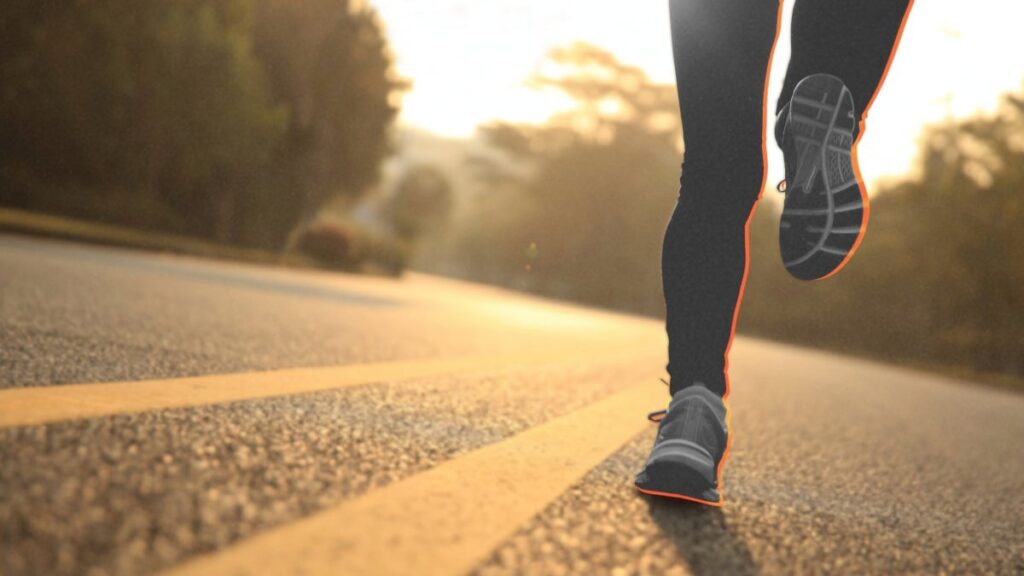

Running can get harder as you age. Normal wear and tear takes a toll, and your body needs more energy to cover the same distance.
A new study, published in the Journal of Experimental Biology in November 2026, found that some muscles in older runners were weaker than those in younger runners. Other muscles overcompensated for those weaknesses.
“The aging process leads to decreased strength and volume of muscles, including the calf muscles involved in plantarflexion,” Changal T. Nguyen, MD, a sports medicine physiatrist, told Outside.
Dr. Nguyen is also a clinical assistant professor of orthopedic surgery at Stanford and was not involved in the study. “The calf muscles and Achilles tendon also become less stiff with age, so they work less effectively as a spring, she said.
The good news, Dr. Nguyen said, is that adding a few simple exercises to your routine can help keep your calves strong and your Achilles tendon functioning well as you age.
How the Muscles in Your Feet and Legs Start to Work Differently as You Age
The authors of the new study recruited 18 runners with an average age of 26.1 years and 18 runners with an average age of 63.4 years. The study referred to each group as “young athletes” and “master athletes,” respectively.
The researchers measured the athletes’ Achilles tendon stiffness and plantar flexor movements. (The plantar flexor muscles—located in the feet, ankles, and calves—propel you forward and upward as you run.) Then, both groups completed two six-minute treadmill sessions at two different speeds—roughly 5.6 miles per hour (mph) and 6.7 mph.
They found that master athletes’ hips worked harder than those of younger athletes. Their ankles, on the other hand, did less work compared to those of younger athletes. Master athletes also exhibited weaker plantar flexors.
Some of these findings could be explained by decreased calf and Achilles stiffness, Dr. Nguyen said: “When the calf can no longer generate as much power at push-off, the body compensates by relying more on other muscles, such as those around the hip.”
The researchers found that master athletes also spent more energy running, and their energy cost increased with speed.
“One notable finding is that the gap in energy cost widened at the faster speed, from about five percent to about 13 percent,” Dr. Nguyen said. “This hints that the age-related deficit may grow as running demands increase, although the study tested only two moderate speeds, so whether the gap keeps widening at tempo or race pace is unknown.”
There are a couple of limitations worth noting. The study had a small sample size, and the runners were tested at only two speeds on a treadmill, Dr. Nguyen said. Because of these limitations, it’s uncertain whether the findings would hold in different settings—for instance, on a trail—or at different speeds.
How to Maintain Calf Strength and Achilles Tendon Function as You Get Older
Strengthening your calf muscles and improving Achilles tendon function promotes gait efficiency (the amount of energy needed to walk or run; a high gait efficiency means less energy is needed to complete the motions involved in walking or running), which can help you keep running as you age, Dr. Nguyen said. She recommended three exercises that can help with this.
Exercises to Build Calf and Achilles Tendon Strength
- Single-leg calf raise off a step. She said you can build toward three sets of 15 per leg, then add weight with a dumbbell or a backpack once that feels easy.
- Bent-knee or seated calf raise. Dr. Nguyen suggested using a heavy load, such as a weight across the knees, for three to four sets of eight to 12 repetitions.
- Pogo hops, or single-leg hops. These can improve calf and Achilles stiffness and elastic return. She recommended starting with two to three sets of 20 to 30 two-footed pogo hops, then transitioning to single-leg hops when that feels easy.
Want more Outside health stories? Sign up for the Bodywork newsletter. And for tips on how to train, fuel, and recover better, sign up for the Sweat Science 101 newsletter.
The post New Research Shows Why Running Takes More Energy as We Get Older appeared first on Outside Online.
About The Author