
How Reju Is Turning Polyester Textile Waste Into New Materials
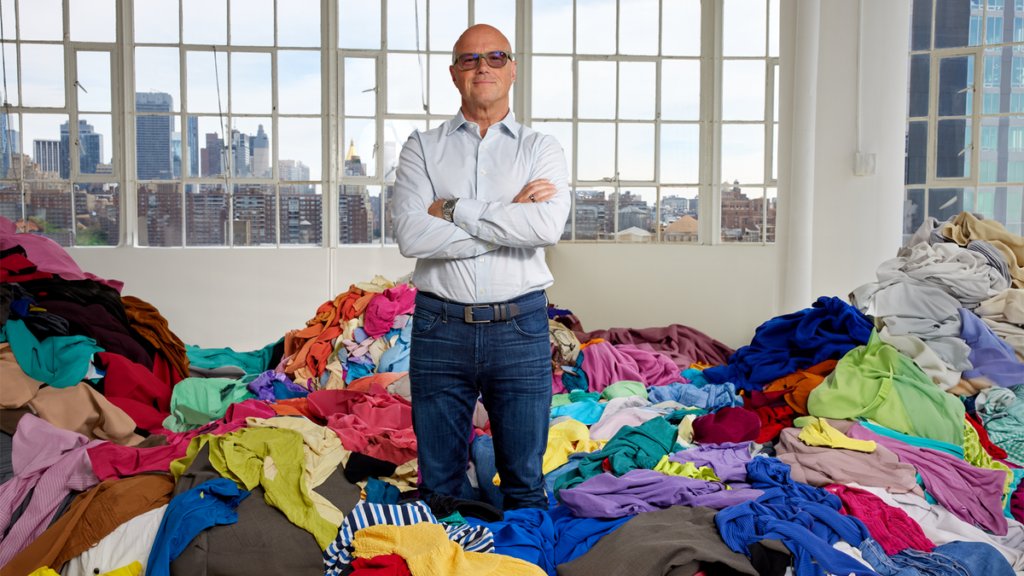
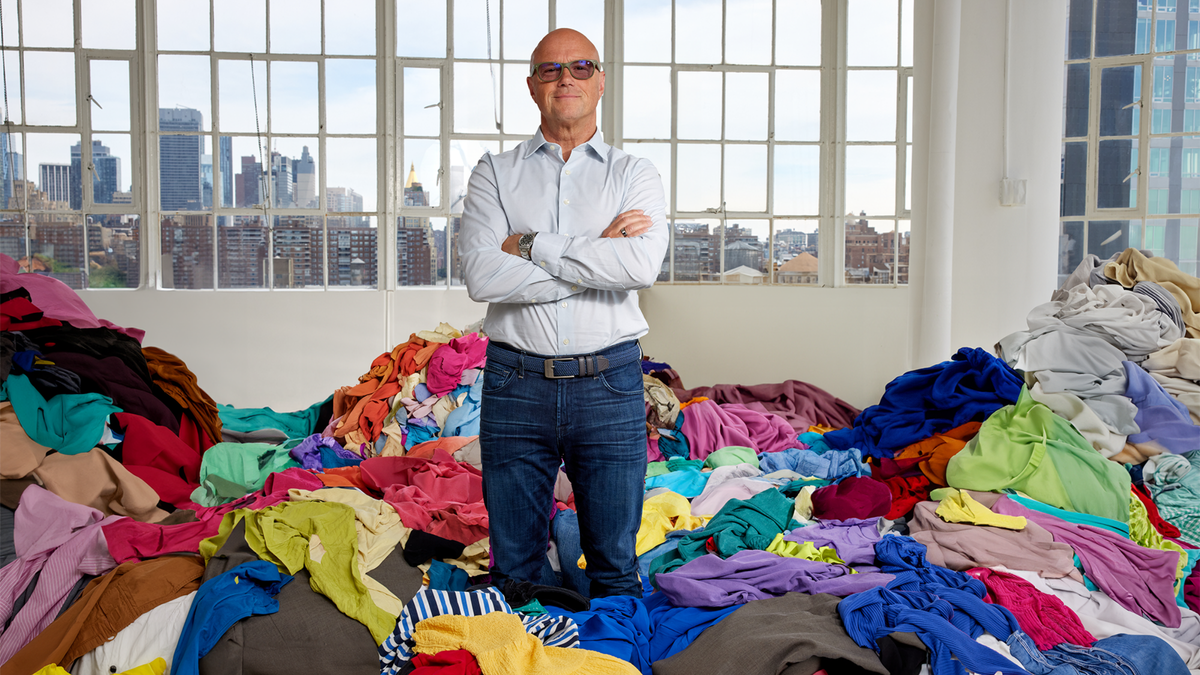
Patrik Frisk has spent his entire career selling polyester. At companies like Under Armour, The North Face, and Gore-Tex, he oversaw the production of synthetic base layers and fleeces, technical shells and packs—all made, at least in part, with the petroleum-derived material.
But looking back on three decades in the sportswear industry, Frisk has been left with the uncomfortable realization that much of what he helped put into the world will eventually be thrown into the mountainous pile of textile waste, ending up in landfills or incinerators.
In a way, he’s now cleaning up his mess. As CEO of Reju, Frisk is working to develop technology that can turn discarded polyester textiles back into new materials.
“If we don’t do it, you and I are going to be swimming together in the waste,” Frisk says.
The Polyester Crisis
The problem is so much bigger than just those outdoor brands Frisk once led. Plastic in fabric form, polyester is the most ubiquitous synthetic fiber in the world, with more than 124 million tons produced each year. It is a workhorse in outdoor gear, prized for its durability, low cost, versatility, and performance, and it’s in everything from midlayer fleece and running shirts to backpacks, tents, and sleeping bags. Polyester is simply too useful to stop producing.
Yet less than one percent of textile waste is recycled back into new fibers for clothing. That means most polyester has a one-way trip: from fossil fuels to fibers to goods and garments, many of which are inevitably tossed after only a few years in somebody’s closet.
Through Reju, Frisk is trying to disrupt that cycle, intercepting polyester on its way to the dump.
Breaking It Down to Build It Back Up
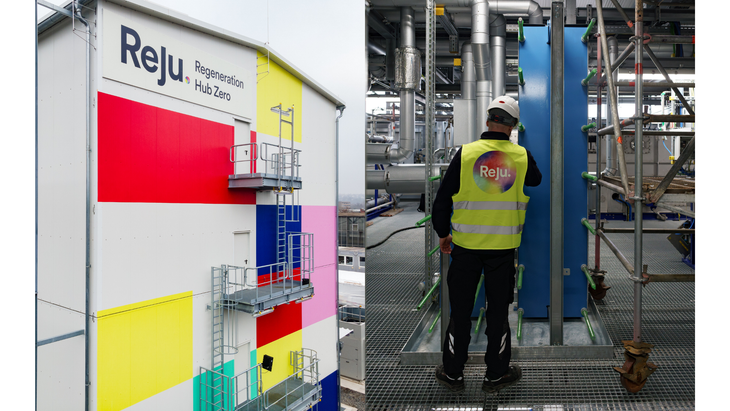
Founded in 2023, Reju is backed by the French engineering and technology company Technip Energies. Reju’s corporate offices are in Paris, where Frisk lives, and its pilot textile-to-textile recycling plant is in Frankfurt, Germany.

There, at what Reju calls the Regeneration Hub, engineers and chemists have been testing different processes. To start, post-consumer polyester garments, no longer wearable, are stripped of zippers, buttons, and other trimmings, then shredded or cut into tiny little pieces.
Herein lies the challenge that has long stumped textile recyclers: Polyester is rarely the only fiber content. A typical garment might combine it with cotton, nylon, or elastane, and separating those fibers has long been one of the thorniest problems in the world of circularity.
Reju’s process, however, uses chemistry to tease apart those materials, isolating the polyester and breaking the polymer down into a monomer. What’s left behind is a powder of pure polyester that is turned into polyester pellets, which can then be extruded into fiber and yarn, and finally made back into a fabric of high quality.
The long-term goal is to eventually partner with brands—perhaps Under Armour or The North Face?—that will buy and use the fabric for new garments.
“The end game here should be that we take whatever is produced, and put it back into the value chain of the brands,” Frisk says.
Reju’s American Hub
A point of resistance: The Reju process is quite pricey. But Frisk argues that for years, brands have already been paying to turn plastic waste back into polyester, using PET water bottles and even fishing nets.
Those bottles are mechanically shredded into flakes, melted, and spun into fiber—a process that, Frisk says, degrades the polyester each time it’s recycled, gradually reducing the quality of the material and limiting how many times it can be recycled.
Frisk, who was an early advocate of the system, sees this as a significant limitation of mechanical recycling. Why, then, turn an apple into an orange when you could make a better apple? Reju’s process, he says, introduces something new and better, using the material world’s finite resources as the solution.
But before Reju can even consider selling its material, first it has to build the infrastructure.
This year, Reju announced its initial two U.S. facilities. A Regeneration Hub in Rochester, New York, is expected to begin operations in 2029, and a Research & Development Center in Conshohocken, Pennsylvania, will focus on developing new recycling technologies.
By no coincidence, Rochester is also home to Goodwill of the Finger Lakes headquarters. Reju has spent the past three years working with the organization, as well as Waste Management, to figure out how to “minimize the waste and maximize the value”—and, Frisk says, not “resort to bailing that up and shipping it into some foreign country.”
Goodwill of the Finger Lakes CEO and President Jennifer Lake has a front row seat to what’s being hand-sorted, and therefore what items still have value and what items don’t end up on shelves. Over the last five years, the number of low-value items that end up at Goodwill has increased, says Lake, who chairs the company’s circularity committee.
“When you think of things that are beyond the point of repair, is there a way for them to be turned into, in textile’s case, the textiles of tomorrow?” Lake says.
For gear users who are increasingly conscious of repairing their gear and wondering where it goes when it finally wears out, Reju offers a reason for optimism. By the time its New York hub is operational, in about three years, the company hopes to regenerate the equivalent of 300 million garments annually. And polyester is just the start.
The post How Reju Is Turning Polyester Textile Waste Into New Materials appeared first on Outside Online.
About The Author