“We’re Kind of Crushing It.” Why One Wyoming Mountain County Has a Life Expectancy of 94.
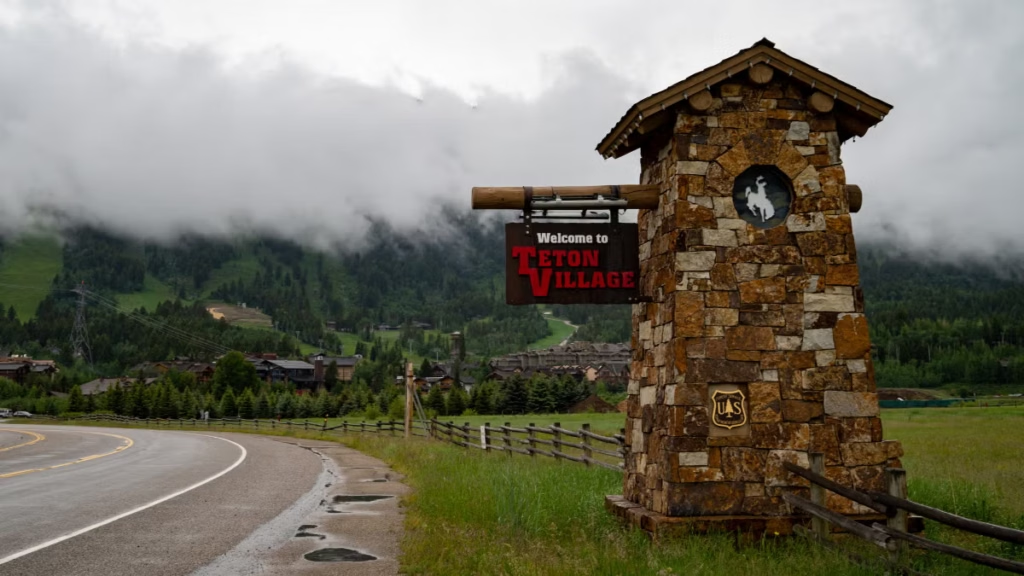

According to new data, residents in Wyoming’s Teton County have the highest average life expectancy in the country: 94 years.
Jackson Hole News and Guide first reported the finding on November 4, and Travis Riddell, MD, MPH, the director of the Teton County Health Department, first presented the data point at a Teton County Board of County Commissioners meeting on October 26.
After looking at mortality data over a three-year period, between 2022 and 2024, using U.S. Census population projections for the county as the denominator, Dr. Riddell and experts at the Teton County Health Department found that residents of the county have a life expectancy of 94 years. Dr. Riddell said that beyond comparisons to national averages and Wyoming state averages, they also compared Teton County data to that of 13 other comparable counties with popular mountain towns—called “peer counties”—including Vail in Eagle County, Colorado, Aspen in Pitkin County, Colorado, and Park City, Utah, in Summit County, among others. The numbers will be formally published in Teton County’s Triennial Community Health Assessment in June 2027.
To put the number in perspective, the average life expectancy across the United States is 79 years, per the most recent mortality data from the Centers for Disease Control and Prevention (CDC) released in 2024.
“My job here as the director of our health department is to encourage and promote health and the health of our community. And to see longevity like that, it almost makes me wonder if I will still have a job moving forward. We’re kind of crushing it, at least in this specific metric,” Dr. Riddell told Outside.
Longevity remains one of the biggest buzzwords in health conversations, with people trying any number of elixirs, fitness tests, or extreme biohacking measures to live longer. But what if living longer is as simple as getting outside and moving your body? And how can people emulate the lifestyle of mountain residents to live a longer, healthier life?
Here’s what Dr. Riddell and Ingrid Yang, MD, an internal medicine physician specializing in longevity and not affiliated with the Teton County Health Department, had to say.
Why Do People in Mountain Towns Live So Long?
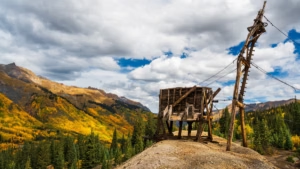
Teton County is the 12th-largest county by total area in Wyoming and has a population of roughly 23,000 people. It’s known for its scenic mountain landscapes and is home to Grand Teton National Park, around 40 percent of Yellowstone National Park, and Jackson Hole—a premier hub for outdoor recreation and winter sports.
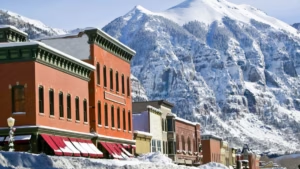
Teton County isn’t alone; other mountainous counties also have high life expectancies, according to 2025 data from the Demographics Atlas, which draws on data from the CDC’s National Center for Health Statistics. San Miguel County, home to Telluride, Colorado, has a life expectancy of 86.5 years; Summit County, home to Park City, Utah, has a life expectancy of 84 years; and Deschutes County, home to Bend, Oregon, has a life expectancy of 80.9 years.
Life expectancy refers to how long a population in a specific place is expected to live. Because we can’t predict how long people will live, public health experts rely on statistical data to determine average lifespan.
“Life expectancy is a really common metric used to measure health and longevity of various populations. And of course it’s a broad number. It is not necessarily indicative of any one individual’s expected life duration. That all depends on many, many factors, some of which we get to choose in life and others which we do not,” Dr. Riddell said. Those factors may include geographic location, family medical history, access to healthcare and nutritious food, and disease risk, according to Cleveland Clinic.
Mountain Towns Are Known for an Active Lifestyle
At nearly 20 percent higher than the national average, Teton County’s 94-year life expectancy is an exceptional statistic. This recent data suggests that mountain towns may be leading the charge in longevity. Why is that?
“That is the million-dollar question for sure,” Dr. Riddell said. Again, any conversation about why a population lives or dies isn’t definitive, so while reasons why the life expectancy is as high as it is are speculative, they are still informed by scientific data.
“We know that Teton County is a really, really healthy place. I think recreation opportunities here are off the charts. We have low smoking rates, we have low obesity rates, and we have low disease rates that are associated with all of those things,” Dr. Riddell said.
But there may be a bit of a chicken-and-egg scenario happening here, too, Dr. Riddell said. Teton County is a healthy place, but its culture of outdoor recreation and healthy living might attract people who already have an affinity for that lifestyle.
There’s a caveat, though. While exercise is largely protective of joints and helps lower chronic inflammation over time, Dr. Yang told Outside, the biggest risk to longevity in the mountains is trauma.
“Ski, bike, and climbing injuries such as anterior cruciate ligament (ACL) tears damage joints far more than [regular] wear and tear does.” Extreme lifelong endurance training has been linked with higher rates of atrial fibrillation (an irregular heartbeat) in some athletes, Dr. Yang said. This doesn’t negate the overall benefits, though, she explained. Staying active is still a protective measure. “For almost everyone, the danger is too little activity, not too much,” she said.
Other facets of mountain town life, Dr. Yang said, like social connection, proximity to green spaces, and cleaner air, are also associated with long-term health.
Wealth and Living at Altitude Also Play a Role in Life Expectancy
Another major factor is wealth. “Teton County is the wealthiest county in the U.S., with one of those measures being per capita income. That brings resources that another county this size might not have,” Dr. Riddell said. He named health delivery services, high-end food options, and restaurants as a few of those beneficial resources.
“In the U.S., income is one of the strongest predictors of how long people live,” Dr. Yang said. “A 2016 study reported that at age 40, the richest one percent outlive the poorest one percent by 14.6 years (men) and 10.1 years (women),” she said.
Dr. Yang said that living at altitude may also play a role in longevity. “Teton County sits at an average elevation of 7,800 feet. At that height, moderate altitude is linked with lower cardiovascular mortality and better metabolic profiles,” she said. Still, Dr. Yang noted that the people who live there and their overall lifestyle outweigh any potential effect of altitude. And very high altitude—above 11,500 feet—Dr. Yang said, is linked with accelerated aging.
How to Apply Mountain Town Living to Your Own Lifestyle
To reap the benefits of mountain-town living no matter where you’re based, Dr. Yang suggests keeping the following in mind:
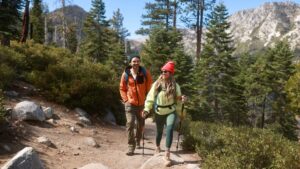
- Walk every day, outdoors when possible: daily movement, combined with time outside, captures both the activity benefit and the green-space benefit.
- Build movement around social connection: hiking groups, walking with friends, and community activities give two of the strongest protective factors at once.
- Avoid smoking: Dr. Yang said Teton County’s low smoking rate and low obesity rate likely explain a lot of its advantage. Tobacco use is associated with cardiovascular disease and cancer and shortens life expectancy by about ten years, according to the CDC.
Want more Outside health stories? Sign up for the Bodywork newsletter. And for tips on how to train, fuel, and recover better, sign up for the Sweat Science 101 newsletter.
The post “We’re Kind of Crushing It.” Why One Wyoming Mountain County Has a Life Expectancy of 94. appeared first on Outside Online.
About The Author