These Will Be the Snowiest Adventure Towns This Winter, According to a Meteorologist

Every year, America’s snowiest towns are typically located in the mountains or on the banks of the Great Lakes. With a few ski resorts already open, if you’re a powder chaser you are likely chomping at the bit for ski season to get into full swing—especially with projections of Super El Niño turbocharging snowfall.
I’m a television meteorologist with over 30 years of forecasting experience, as well as an avid skier and snowshoer. Growing up in Greenville, South Carolina, I prayed for snow days. Now, as an adventurer, I chase the powder.
A prime sign of Super El Niño’s influence is what just happened in Chile. In late August, a resort called Ski Portillo got multiple snow dumps tallying over 30 inches in a few days. Its record-breaking season hit almost 500 inches, double the typical average.
As Super El Niño continues to strengthen, the NOAA Climate Prediction Center is still forecasting a greater-than-83-percent chance of a strong-to-very strong El Niño, likely from January through March. But not everywhere is going to get a stellar snow season.
With the strengthened subtropical jet stream, Super El Niño means an active southern storm track and wetter-than-normal conditions for the southern tier of the United States. That favors the Southwest, the Southern Rockies, and California’s Sierra Nevada.
The kicker to the season—one that’s not getting a lot of buzz—is the Pacific Decadal Oscillation (PDO), a fluctuation of ocean temperature in the Pacific, entering a cooling phase. That was a big factor in Juneau, Alaska, getting its record-setting snowfall of 201.2 inches during the 2006-7 winter. A strong El Niño and a cool PDO are a highly unusual pairing we haven’t seen since 1972-73, a winter with a significant snowstorm that buried parts of the Southeastern U.S.
Then there is the recent weird behavior of the polar vortex, a rotating mass of cold air and low pressure. Its unusual weakening would normally send a significant Arctic blast into the United States, but there’s not enough cold air across Canada yet for this to happen.
Simply put, it looks like we’re in for supersized and wild weather this winter.
These are my picks for the adventure towns most likely to receive the snowiest winter, including a couple of spots that don’t normally top the “most snow” list.
Mammoth Lakes, California: The Snowy Shoo-in

- Average snowfall: 350 inches
- Last season snowfall: 297 inches
Based on historical records during very strong or Super El Niños, and its maritime air pipeline at full throttle, Mammoth Mountain Ski Area is pretty much a lock for a big snow year. While the 2015-2016 very strong El Niño recorded a near-average season of 393 inches, the 1982-1983 Super El Niño produced a whopping 546.3 inches. In 1983, January picked up 118 inches of snow and March had 112 inches, extending Mammoth’s ski season through late July.
Off-Slopes Snow Fun: Take a thrilling ride on the mountain coaster or go snow tubing at Woolly’s Adventure Summit. You can zipline year-round too, or zoom through scenic terrain with Snowmobile Adventures. For a surreal, scenic stop, head to Mono Lake, just 30 minutes away, to see its pogonip ice fog. Because of the lake’s high salinity, it doesn’t freeze. The low-lying ice fog against the limestone tufa towers is otherworldly. Plus, it’s a prime place for wintering waterfowl, such as bald eagles.
Basecamp: The Village Lodge Mammoth puts you in the heart of The Village, whereas the historic Mammoth Mountain Inn is best for ski-in/ski-out access.
Where to après: For a next-level après, book the VIP Après Experience at Lincoln Bar at Canyon Lodge. For late-night shenanigans, join the “Night Shift” party at Outbound’s Bar Sierra. The best place to chill on a slopeside sundeck is Yodler Restaurant & Bar. For local sips, stop by Shelter Distilling, Mammoth Brewing Company, or Distant Brewing.
Fort Valley, Arizona: Stargaze Near Arizona Snowbowl

- Average snowfall: 260 inches (AZ Snowbowl), 83.1 inches (town)
- Last season snowfall: 150 inches
Yes, there’s skiing in Arizona, and it’s not far from the Grand Canyon. For a high-desert ski experience, the historic settlement of Fort Valley makes the perfect playground for the Arizona Snowbowl. This tiny unincorporated community is just northwest of Flagstaff, which averages more snow annually than Denver or Salt Lake City.
With a front-row seat to atmospheric river impulses riding the subtropical jet, Fort Valley and Arizona Snowbowl should have well-above-normal snow totals, with the heaviest snow likely in February.
Located in the San Francisco Peaks, Snowbowl historically gets spikes in snowfall during strong El Niño years. During the 2023-24 El Niño, Arizona Snowbowl recorded 281 inches of snow. Its six inches of snow October 24-25, 2026, is a good sign for Arizona’s only ski resort, and for Fort Valley. It is also interesting to note that during the 1972-73 winter of strong El Niño and cool PDO, nearby Flagstaff got a record-setting 210 inches of snow.
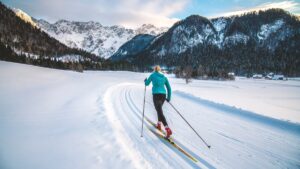
Off-Slopes Snow Fun: After a morning on the slopes, make a stop at the Museum of Northern Arizona. Don’t miss the “Native Peoples of the Colorado Plateau” and “Southwestern Jewelry” exhibits. Go cross-country skiing or snowshoeing at Arizona Nordic Village or the Peak View Winter Recreation and Parking Area in the Coconino National Forest. Just 20 minutes away, Flagstaff Snow Park is perfect for snow tubing and sledding fun.
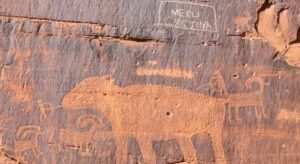
Take a day trip to Grand Canyon National Park. The South Rim is just over an hour away. The bonus of a winter visit is the lack of crowds. You can easily visit three national monuments in a day: see Ancestral Puebloan dwellings in Walnut Canyon and Wupatki, and experience a moon-like landscape at Sunset Crater Volcano, where every astronaut who has set foot on the moon has trained. Bundle up for stargazing at nearby Lowell Observatory in Flagstaff for a truly out-of-this-world evening.
Basecamp: Book a mountain cabin for a cozy stay. Basecamp at Snowbowl is a good budget-friendly and pet-friendly option. Plus, you get two complimentary lift tickets per night.
Where to après: Basecamp Restaurant is the go-to spot, as it’s less than 5 minutes from Fort Valley and on-site at Basecamp at Snowbowl, located 7 miles from the ski area. You’re also close enough to Flagstaff to devour delicious eats at favorites like Diablo Burger, The Toasted Owl Cafe, or MartAnne’s Burrito Palace.
Brian Head, Utah: Highest Resort Town in America

- Average snowfall: 360 inches
- Last season snowfall: 228 inches
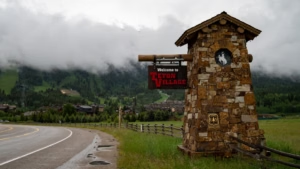
Sitting at 9,800 feet in Dixie National Forest, Brian Head is the highest incorporated town in Utah. The rustic mountain town is named for nearby Brian Head Peak. Dubbed the “highest resort town in America,” it’s home to the small ski area of Brian Head Resort, which has the highest base elevation in Utah.
Brian Head is in a sweet spot for Super El Niño’s elevated snow amounts. Plus, its high elevation helps sustain snow quality. Multiple rounds of significant snow in October were the prelude to what should be above-average snowfall and cooler temperatures this winter.
Off-Slopes Snow Fun: Soak in the scenery of red rock hoodoos dusted with snow at nearby Cedar Breaks National Monument, where you can go cross-country skiing and snowshoeing. Explore the backcountry on a snowmobile tour with Thunder Mountain Motorsports.
Zoom down the hill while snow tubing at Giant Steps Snow Tubing Park. Bundle up to admire the night sky while enjoying some high-altitude stargazing. Brian Head also makes a great high-elevation base camp for day trips to Bryce Canyon National Park and Zion National Park.
Basecamp: Book two nights at Brian Head Lodge and get two free lift tickets with promo code FreedomToSki. There are also numerous cabins and condominiums for rent.
Where to après: Last Chair Grill and Brews on the third floor of Giant Steps Lodge is the premier slopeside spot. They boast the largest beer selection in southern Utah and have live music on Fridays and Saturdays. For more low-key options in town, head to 1st Chair Thai and Ramen or Pizanos Pizza.
Telluride, Colorado: Top Snowy Historic Mining Town

- Average snowfall: 206 inches (resort), 130 inches (town)
- Last season snowfall: 135 inches (resort)
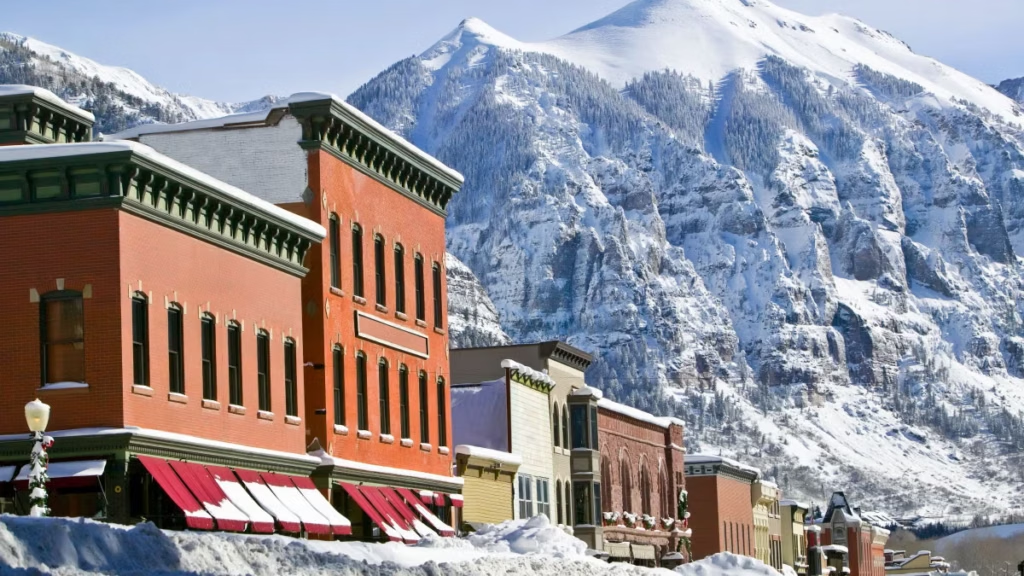
Colorado’s San Juan Mountains are heavily favored for atmospheric rivers to create stellar snow totals. If you want to experience the Alps without leaving the U.S., the San Juans deliver, with their jagged peaks resembling their European counterparts.
Telluride is my number-one pick for where I want to go this winter. I love the Victorian architecture in the historic mining town paired with the ski resort experience in Mountain Village, connected by the free Telluride Gondola.
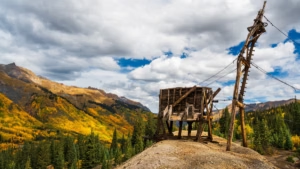
Off-Slopes Snow Fun: Whether you go to Bridal Veil Falls—Colorado’s tallest free-falling waterfall—or hike along locals’ favorite, the Jud Wiebe Trail, winter hiking and snowshoeing around Telluride are breathtakingly beautiful. Experience some of the best ice climbing in the world on a guided climb with San Juan Outdoor Adventures. For the ultimate backcountry experience, try heli-skiing or riding with Telluride Helitrax. Go with Telluride Outfitters on a snowmobile tour to Alta Ghost Town—a unique way to experience Telluride’s mining history.
Basecamp: I prefer staying in town with the European chalet vibes of The Hotel Telluride being my personal favorite. If your preference is closer to the slopes, the Madeline Hotel and Residences in Mountain Village is excellent.
Where to après: Bellying up to the Historic Bar at the New Sheridan Hotel is an absolute must in Telluride. Dating back to 1895, it’s considered one of the most famous bars in the West. Grab pizza at Brown Dog and Pad Thai at Siam. The Butcher and The Baker is always good. On the mountain, sitting outside at Bon Vivant is delightful on a sunny day, and Alpino Vino is the highest fine-dining restaurant in North America. For the best sunset, take the gondola to Allred’s Restaurant.
Wolf Creek Ski Area near Pagosa Springs, Colorado: Ski and Soak

- Average snowfall: 430 inches
- Last season snowfall: 192 inches
Torrential downpours across the Four Corners caused devastating flooding across Southwestern Colorado. The heavy rains are likely an indicator of deep snowfall to come later in the fall.
Historically Wolf Creek gets the most snow in Colorado, with multi-day storms that drop feet of snow, such as the February 17 to 21, 2026, storm cycles that dumped almost five feet of snow (59 inches). During the El Niño winter of 1978-79, Wolf Creek got 807 inches of snow, which is Colorado’s record for a single-season total at a ski area or resort.
There are three reasons Wolf Creek gets so much snow. First is its high elevation. The base sits at 10,300 feet. Second is the funneling effect of its local topography. Located just south of the summit of Wolf Creek Pass, it sits in a unique L-shaped bowl that acts like a catchall basin for snow. Third are the storm tracks pushing up against the San Juans, which should bode well for a high snow total this season.
Off-Slopes Snow Fun: As one of the premier destinations on Colorado’s 800-mile Historic Hot Springs Loop, Pagosa Springs on the west side of Wolf Creek Pass is perfect for a ski-and-soak getaway. Hike to frozen Treasure Falls. The 105-foot plunge waterfall between Wolf Creek Ski Area and Pagosa Springs freezes into massive ice columns, attracting technical ice climbers.
Take the scenic drive, then hike the Piedra Ice Fissures Trail to see ice caves. Satisfy your need for speed by snowmobiling in the San Juan National Forest and to the Continental Divide on a guided tour with Wolf Creek Snowmobile Tours. You can also take a day trip to see the cliff dwellings in Mesa Verde National Park.
Basecamp: There is no lodging at the ski area, so plan to stay in Pagosa Springs. My favorite is The Springs Resort and Spa [Editor’s note: At the time of publishing, some of the pools at the resort are not open due to flooding. Please call ahead for the most up-to-date information.] It’s home to the Mother Spring, the deepest geothermal hot spring in the world, certified at a depth of at least 1,002 feet by Guinness World Records. If you stay there, you get 24-hour access to the soaking pools. The Clouds in My Coffee pool is my favorite for an early morning soak with coffee in hand.
If you don’t want to drive and park in one of the free on-mountain lots, Wilderness Journeys Pagosa runs a daily shuttle, but you need to make a reservation in advance.
Where to après: Sip an IPA at Riff Raff Brewing Company. Savor a craft cocktail at The Neon Mallard. Order the fish tacos at Kip’s Grill. You’ll thank me later. Relax with a latte or tea at the Root House. The founders of this cool coffeehouse and shop are the stars in HGTV’s Building Roots. The cinnamon rolls are sinfully good. Finally, grab a sandwich or quiche at Pagosa Baking Company.
Taos, New Mexico: The Snowy Surprise

- Average snowfall: 317 inches
- Last season snowfall: 76-88 inches
Famous for its historic adobe architecture and vibrant art scene, Taos doesn’t normally rank high on the list of America’s snowiest adventure towns. But this year it could, since it’s in the favorable storm track of the active subtropical jet stream.
Less than 20 miles north of town, Taos Ski Valley has over 300 inches of snow annually. In town, snow typically peaks in December and January but continues to fall well into March at the ski resort. Angel Fire Resort is also about 45 minutes away.
Off-Slopes Snow Fun: Taos Pueblo is a UNESCO World Heritage Site that’s been inhabited for over 1,000 years. With the chill in the air and fireplaces glowing, I love visiting the pueblo in December. Grab a latte in Dawn Butterfly then stroll through the artisan shops, such as Pueblo Runner. Make sure to sample the fry bread while visiting. Taos Pueblo does close annually for six to eight weeks in late winter and early spring for traditional ceremonies.
Beyond the nearby slopes, you can also go snowshoeing, cross-country skiing, or winter hiking in the Carson National Forest. Soak in the therapeutic waters at Ojo Caliente, about an hour away from Taos. There are several museums and historic homes to tour in town, or you can simply stroll around Taos Plaza. The historic district is filled with art galleries and unique boutiques. Chocolate + Cashmere is my favorite spot to find something cozy, and the Sage Fine Art Gallery is filled with works by award-winning local artists.
Basecamp: If you want to stay where you ski or ride, The Blake is a ski-in/ski-out property at Taos Ski Valley. Just outside of the town’s busy historic district, Hotel Willa is a delightful option for an upscale boutique stay with character in a remodeled 1960s adobe motor lodge. For something completely off-grid, book a stay at Earthship Biotecture.
Where to après: The Bavarian is a fun option at the base of Taos Ski Valley. It’s famous for its German eats and draft beer. In town, the Adobe Bar is a classic après haunt next to historic Doc Martin’s Restaurant. My favorite place in town to chow down is Orlando’s New Mexican Café. Go hungry, and order the blue corn enchiladas. New Mexican enchiladas are layered, rather than rolled.
Winter Wild Cards to Watch
Lake Tahoe, California
Located on the cusp of the transition zone between wet and dry, historical data shows mixed results for the northern Sierra. Strong El Niños trend toward below-normal seasons, while very strong El Niños historically produce above-normal snow averages. It’s a roll of the dice for Tahoe.
Glacier, Washington
Strong El Niños typically mean warmer-than-average winter temperatures for Washington State, but Super El Niños add ample moisture-laden Pacific air that could mean localized wet storms. Glacier is the closest town to Mount Baker Ski Area, which holds the world record for the most snowfall in a single season of 1,140 inches in the 1998 to 1999 season. That was during a strong La Niña season, but I’m never ruling out Mount Baker for big snow totals. In past Super El Niño winters, Mount Baker Ski Area still recorded an average of 642 inches of snow.
Redfield, New York
Thanks to intense lake-effect snow off Lake Ontario, Redfield often tops the list of the snowiest places in the Great Lakes with 380-plus inches of snow annually. This winter looks milder and drier for the Great Lakes. But record-warm lake temperatures on the Great Lakes mean heavy lake-effect snow could pile up quickly when cold Arctic air arrives. Intense, localized lake-effect snow squalls look more likely this winter across the Great Lakes.
Stowe, Vermont
With the NOAA Winter Outlook showing warmer-than-normal and wetter conditions, there’s the potential for heavy, wet snow events. Another key factor is that powerful coastal nor’easters occasionally develop during historical super El Niños. Typical timing for those is late January through February.
Boone, North Carolina
While not normally one of America’s snowiest towns, the powerful subtropical jet stream pulling moisture from the Gulf of Mexico significantly increases precipitation across the Southeast. If a cold-air damming wedge sets up with ample moisture, that means a major winter storm in the Blue Ridge Mountains. The February 1973 “Great Southeastern Snowstorm” is proof that the Deep South sometimes measures snow in feet instead of only an inch or two.
The post These Will Be the Snowiest Adventure Towns This Winter, According to a Meteorologist appeared first on Outside Online.
About The Author