I Spent Years Looking for an Affordable Mountain Town. I Finally Found It.
I was 22 years old the first time I went to Asheville, North Carolina.
On one of our usual Appalachian hiking adventures, my then-boyfriend, now-husband, and I truly thought we’d found our mecca. Here were people like us, lots of them. People with that specific blend of crunchy, outdoor hipsterism that are ubiquitous across the mountain South. People who liked art, live bluegrass, a weekly drum circle, farm-to-table tapas, and easy access to a big adventure.
We’d be back when we could afford to make it permanent, we promised.
A lot has happened in the 15 years since then. Single-family homes have risen in cost all around the country, and affordable mountain towns can feel like a thing of the past, for one thing. My husband and I have also moved all over the place for our careers, eventually calling Seattle home, for another.
But that doesn’t mean our quest for the perfect affordable Southern mountain town ever really ended. And the truth is I think I may have found it.
What Makes the Perfect Southern Mountain Town?
Bear with me as I wax a little vibey.
For me, Southern mountain towns are an entity unto themselves that, when in their perfect state, combine the aesthetics of progressive Southern arts and culture with easy access to a multiplicity of outdoor experiences. If the rest of the Southeast is Country Music, then Southern mountain towns are Americana. A funky little subgenre with its own award show where performers aren’t exactly sure why they get excluded from the mainstream awards, but their fans know the difference inherently. And they value it.
The perfect Southern mountain town has this aura while also being a place where a person can afford to buy a spacious single-family home for under half a million dollars, ideally well under it.
That’s not some official benchmark I got from the U.S. Department of Housing or a real estate website. That simply comes from having lived all over the damn place and fastidiously looking at housing in aspirational outdoorsy locations over the last decade.
Roanoke, Virginia
Enter Roanoke, Virginia.
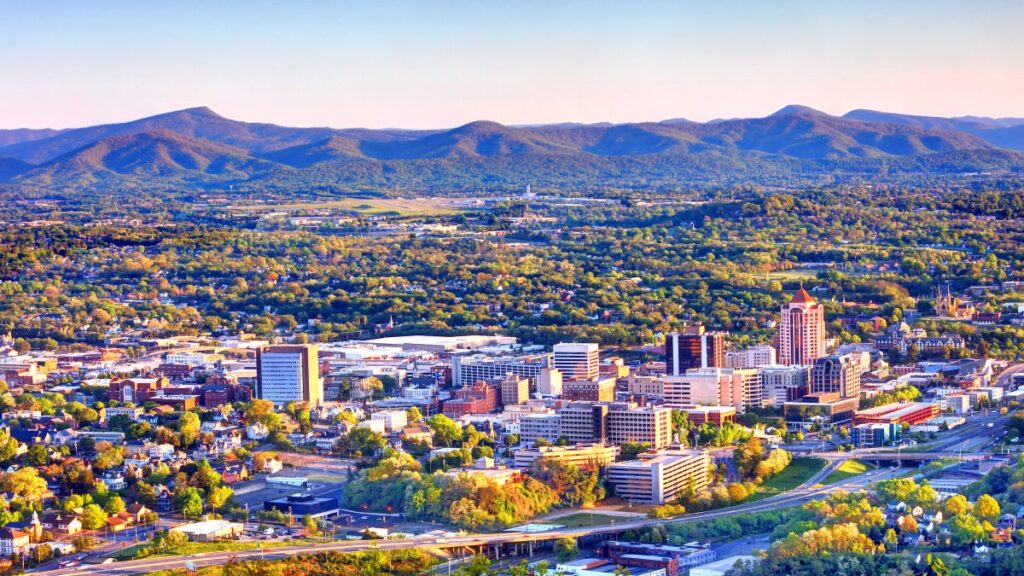
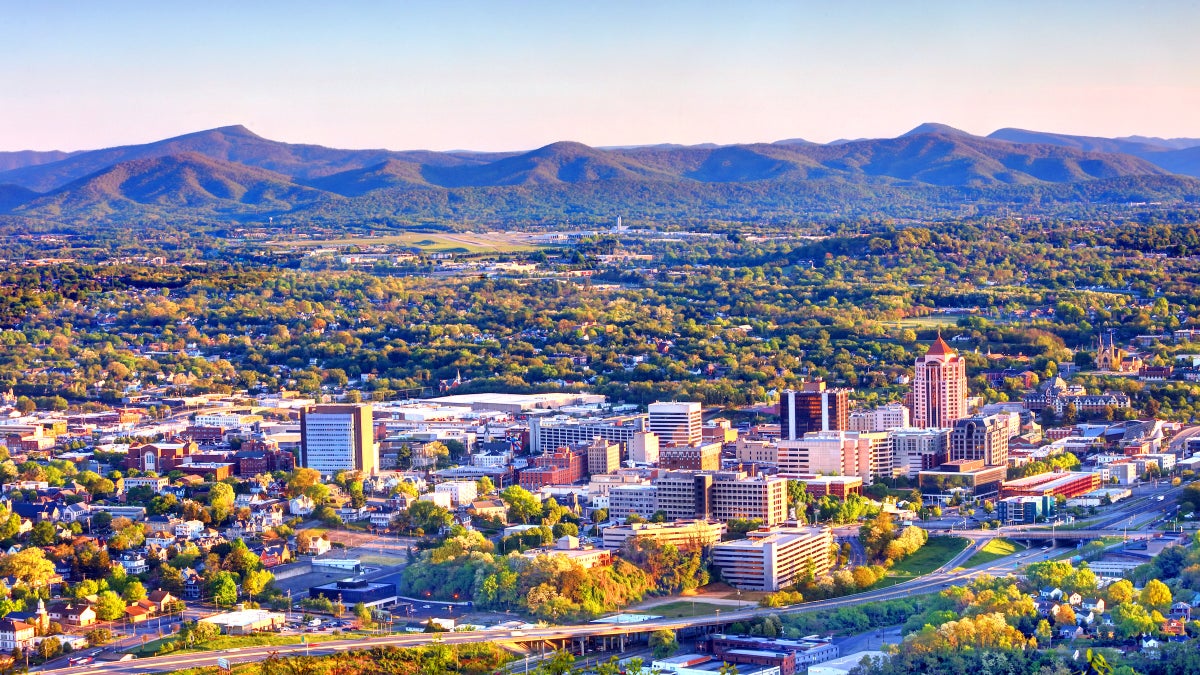
I went to college in Southwest Virginia, and Roanoke, 55 miles to the southwest, was the nearest “big city” to my college town’s bucolic hamlet. I admittedly didn’t think much more of it than having good Thai food and a decent mall when I was 18 years old. However, I recently went to visit the town with my now wizened 37-year-old eyes, and they liked what they saw. A walkable downtown filled with locally owned stores and cafes. Live music venues. Mountain bikers galore. And houses a person could raise their child in with access to all of it—listed in the three hundred thousands.
“The first time I came to Roanoke, I felt like I was stepping back in time,” Richia Austin, a 31-year-old beverage sales professional who has lived in Roanoke since August 2025, told me. “It felt like a surprise. It felt like it had this nineties nostalgia, while also being progressive … There was this element of authenticity that filled the air,” while also being surrounded by beautiful mountains, she said.
Austin and I both grew up in rural West Virginia, and we reflected on the fact that Roanoke feels so much like our favorite tiny West Virginia mountain towns while having the benefits of a larger city.
Things to Do in Roanoke, Virginia
On a visit to see my dad in Roanoke, I walked from where I was staying in a neighborhood called Old Southwest to the Golden Cactus Brewery, which was having its weekly Wednesday “Mid-Week Market,” combining outdoor vendors showcasing their handcrafted wares, foraged goods, and food with an indoor bluegrass jam session.
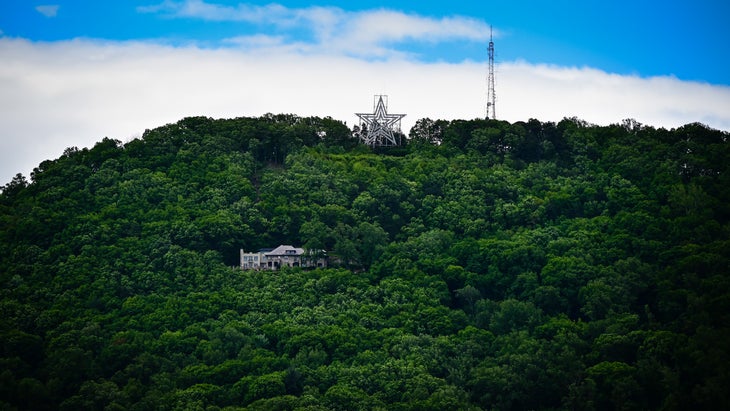
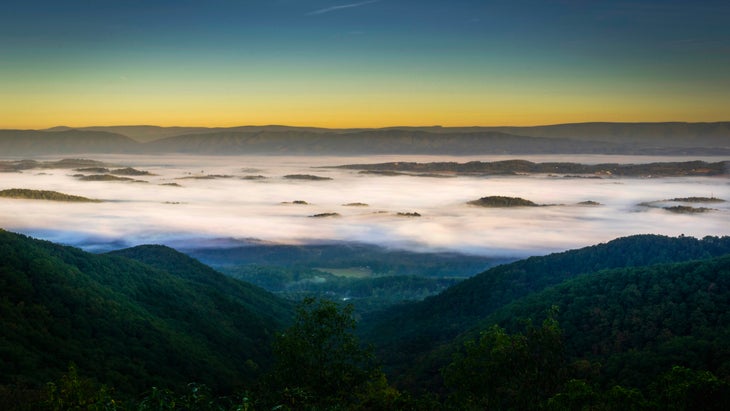
With my four-year-old daughter in tow, I checked out Fishburn Park (which had shades over all the play equipment to help kids manage the summer heat), took a walk along the Roanoke River Greenway, and ate ice cream at local-favorite Blue Cow Ice Cream Co. As I ate my locally-roasted-Red-Rooster-Coffee-flavored ice cream, I watched mountain bikers move in all directions. Some kept to the Greenway, while others made their way up the steep road grade to Mill Mountain, home of a zoo, miles of hiking and biking trails, and the Roanoke Star, “the largest, free-standing, man-made, illuminated star in the world” and a symbol of the Blue Ridge Mountains that is illuminated nightly.
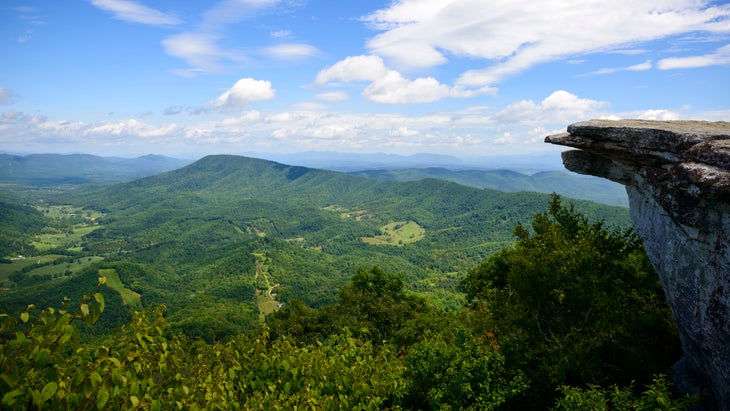
I didn’t have time to hike a stretch of the Appalachian Trail while I was there; my visit was a little too short and a little too hot. But it was comforting to know I could if I wanted to. The McAfee Knob trailhead, after all, was only a 20-minute drive from where I was staying, as was access to the Blue Ridge Parkway, the sky-high conduit to all things mountain Virginia.
“We hike every single Sunday,” Steve Fowler told me when I chatted with him and his wife, Stephanie, about their move from Asheville to Roanoke in 2022. “There’s enough national forest and accessibility to it that it’s fairly rare that we go to the same place” twice, he said.
And it isn’t just about the multitude of outdoor options for the Fowlers. Having lived in Asheville since 2015, the couple began to feel “stifled in terms of financial growth,” unable to move out of the starter home they purchased before the births of their two children due to the rising cost of real estate in the Asheville area. When they decided to change zip codes, the pair was able to afford more land and more living space.
Plus, they say the lack of crowds in Roanoke creates easier access to outdoor adventures. “We go on hikes where we only see a couple other people, even if it’s a fairly popular hike,” Steve told me. “It’s not like Asheville where it’s like one thing gets on a list, and then you can’t go back there anymore.”
How Does the Cost of Living in Roanoke Compare to Asheville?
Is Roanoke as affordable as I perceived?
According to data from Redfin, the median home price in Roanoke was $250,000 as of May 2026. In Asheville, the median home sale price was around $507,000 for that same period. You don’t have to be especially good at math to see that that number is a little more than double. Meanwhile, median household income in Roanoke is close to $55,000 while Asheville is closer to $71,000, according to U.S. Census data.
Roanoke’s Future
I would be lying if I said I didn’t also consider the possible ramifications of a warming planet on potential places to call home. I frequently reflect on an Outside interview I did with UCLA’s David Swain, Ph.D., a climate scientist who helped me understand that no place is immune to the extreme weather events that have marked the last few years. There are only places more civically and infrastructurally prepared for the unique risks they face. When I did some cursory research into the potential weather risks for Roanoke, flooding loomed large. After all, there are 13 major waterways that contribute to the city.
That said, the City of Roanoke is actively working on flood risk management, and there are pages of the city website devoted to it. After experiencing a 1-in-200-year flooding event in 1985, the city took action. Among other forms of preparedness, they now have updated water gauges installed that record water levels in far-reaching tributaries and an app they encourage residents to download that provides real-time flood risk and tracking information.
Plus, the Fowlers told me that Roanoke thinks about and listens to locals more than other places they’ve lived, which is something they value about the city.
And the local residents are the same, Stephanie Fowler assured me. “I feel like people in Roanoke are like, ‘move here, it’s great.’ The attitude is very welcoming.”
The post I Spent Years Looking for an Affordable Mountain Town. I Finally Found It. appeared first on Outside Online.
About The Author