New Research Analyzed 82 Studies to Find Out Whether Skiing or Snowboarding Is Safer
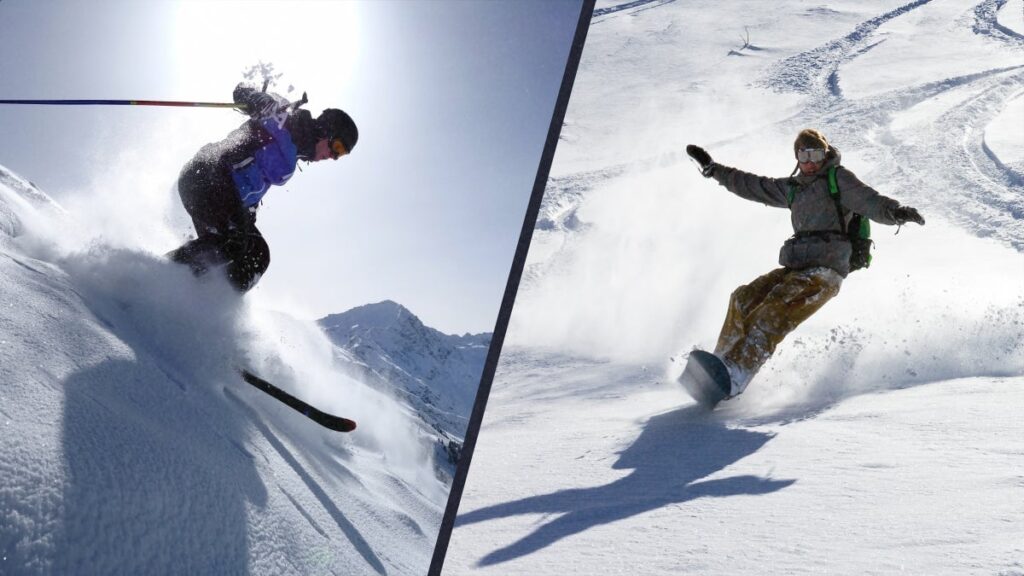

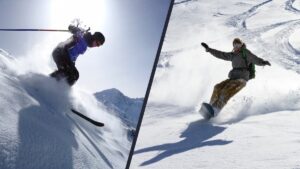
Skiing and snowboarding both come with risks, and it’s difficult to say definitively if one is more dangerous than the other. But recent research suggests the answer may depend on your skill level.
The authors of the study, published in the journal Health Science Reports, found that snowboarding may be more dangerous at the professional level, while skiing may be more dangerous for amateurs.
The researchers also examined which types of injuries are most common among snowboarders and skiers. Their results offer insight into what snowboarders and skiers, particularly recreational skiers, can do to stay safe.
“As a primary care sports medicine physician, what stood out to me was how often a recreational injury started with an ordinary fall,” Sabrina Sawlani, DO, a primary care sports medicine physician, told Outside. Sawlani is an assistant clinical professor in the department of orthopedic surgery in the division of primary care sports medicine at UCLA Health in Los Angeles and was not involved in the study.
“The new research helps us tailor injury prevention advice to the sport and the kind of skiing or riding someone does,” she said.
Which Sport Is More Dangerous: Skiing or Snowboarding?
The researchers analyzed 82 studies that provided data on skiing and snowboarding injuries. Out of every 100,000 runs, professional alpine skiers reported two injuries; for pro snowboarders, that rate was much higher: 380 injuries per 100,000 runs. (The original study based the injury rates on 1,000 runs; we converted the incidence rate and based it on every 100,000 runs so we could express the injury rate in whole numbers for easier understanding.)
The opposite was true among recreational skiers and snowboarders. Among amateur alpine skiers, they reported about four injuries per 1,000 days of skiing; snowboarders reported about one injury per 1,000 snowboarding days.
Despite the data, this doesn’t necessarily mean that recreational skiing is definitely riskier than recreational snowboarding. “I would be cautious about the apparent reversal among recreational participants,” Sawlani said. “Only three studies contributed to the recreational snowboarding estimate, and their results varied widely. I wouldn’t use those numbers to steer a weekend skier toward a snowboard for safety.”
One important limitation is that the studies included in the review defined “injury” differently, so interpreting the results requires caution, as these differences may skew injury incidence rates.
The Most Common Injuries Among Skiers and Snowboarders
Among professional skiers and snowboarders, upper limb injuries were most common, followed by injuries to the trunk, which includes the chest, torso, abdomen, pelvis, and back. Among amateurs, limb injuries were most common overall, particularly knee injuries. Among amateurs, fractures and sprains were the most commonly reported injuries, and falls were the most likely cause of injury.
According to the study, these injury patterns occur because pro snowsport athletes encounter steep hills, high speeds, and complex maneuvers. Amateurs get injured due to poor technique, inadequate conditioning, and falls.
Your risk decreases with experience, Sawlani said, but you can take a few simple steps to prevent common injuries no matter your experience level.
How to Stay Safe on the Slopes
“For either sport, I recommend a well-fitting snowsports helmet, and a lesson with an instructor if you’re starting out,” she said. “Ask your instructor to go over how to fall, and get comfortable stopping and controlling your speed on easy terrain before moving to a steeper run.”
For snowboarders, she recommended wearing wrist guards to reduce risk of injury. Skiers, on the other hand, should talk to a professional to reduce injury risk. “I’d recommend having a qualified ski technician check the boot fit and binding-release settings,” she explained. “A binding needs to hold during a turn and release when appropriate during a fall.”
Another injury prevention tip, she added, is to make sure you’re not going too fast on low-visibility days. You should be able to stop within the stretch of slope that’s visible to you, she explained.
Lastly, don’t push it if you’re feeling less than your best: “If your legs are tired and your turns are getting sloppy, skip that one last run,” Sawlani said.
Want more Outside health stories? Sign up for the Bodywork newsletter. And for tips on how to train, fuel, and recover better, sign up for the Sweat Science 101 newsletter.
The post New Research Analyzed 82 Studies to Find Out Whether Skiing or Snowboarding Is Safer appeared first on Outside Online.
About The Author