Sun Valley Resort Just Became the First DarkSky-Certified Ski Resort in the U.S.
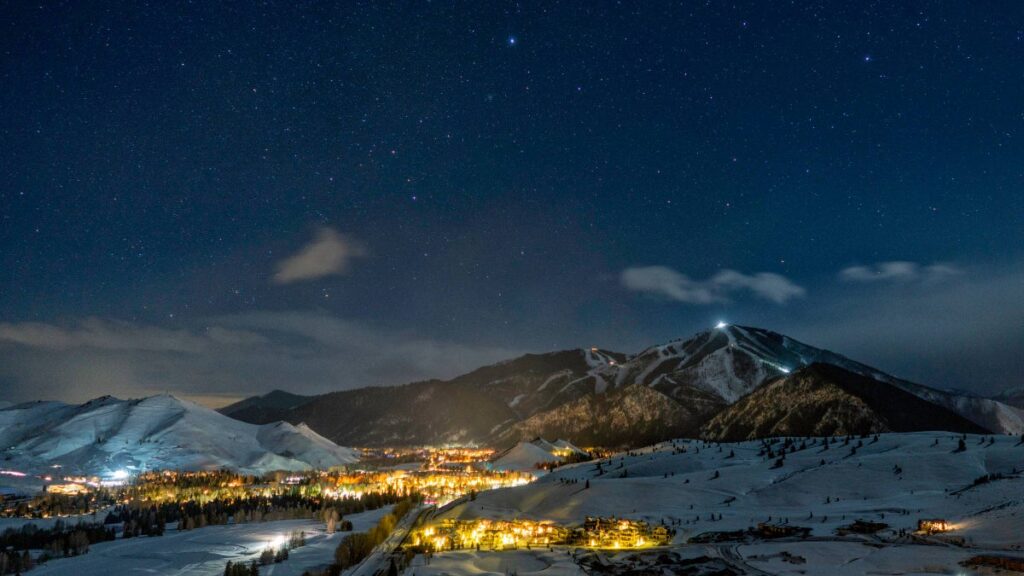
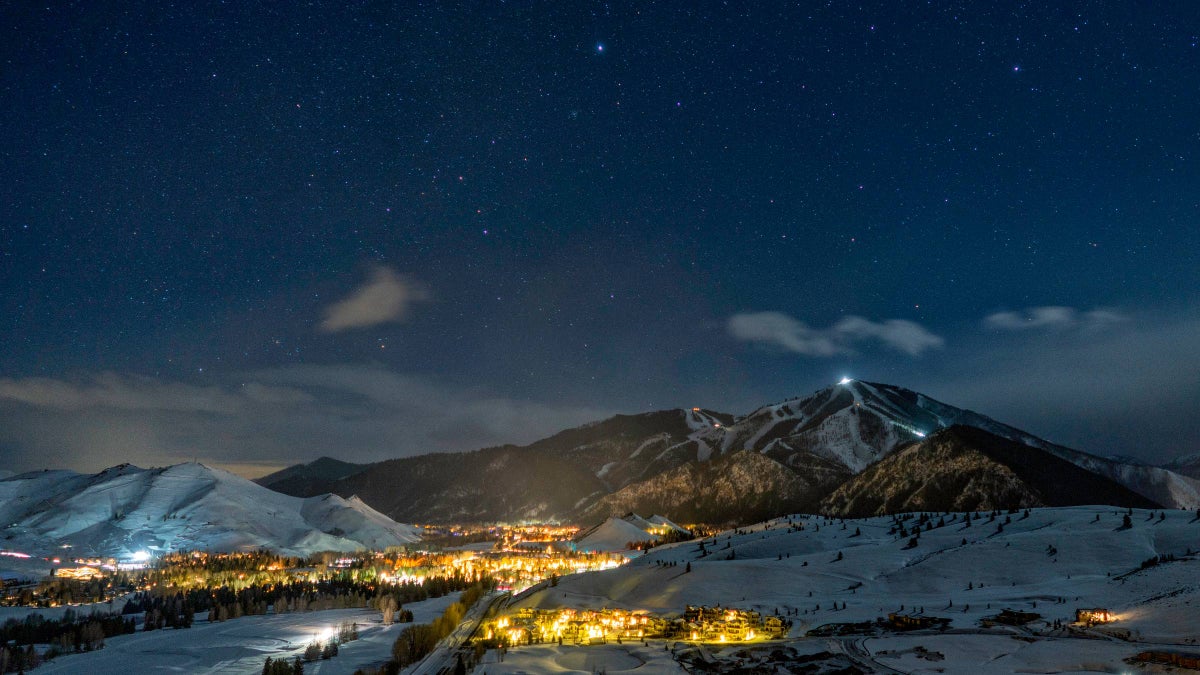
As a lifelong local of the Sun Valley, Idaho, area, home to the famous Sun Valley Resort, I’ve lived my life with a backdrop of towering peaks, flowing rivers, and an expansive and clear night sky. From pointing out shooting stars as my friends and I have sat around campfires to simply taking in the dark, quiet solitude of a wintry night sky while walking home, the vastness that is the night sky in Sun Valley has always been a companion.
Seeing the stars at night has long been a draw for small towns, and Sun Valley is no exception. Both Ketchum and Sun Valley (the two towns associated with the resort, along with other towns in Central Idaho, became part of the Central Idaho Dark Sky Reserve in 2017, the first International Dark Sky Reserve in the United States. Now Sun Valley Resort has gone a step further, becoming the first resort in the U.S. to be officially certified through the DarkSky Approved Lodging and Resorts Program by DarkSky International.
DarkSky is an international organization with one mission: protect the night environment and our dark sky heritage by educating the public on light pollution, promoting environmentally responsible outdoor lighting, and vetting and certifying communities, parks, reserves, and lodging that preserve pristine night skies. While being able to see the stars is obviously a rewarding experience in and of itself, light pollution (which DarkSky defines as the human-made alteration of outdoor light levels from those occurring naturally) can negatively affect numerous species of animals, as well as ourselves, by interrupting natural sleep–wake cycles, migratory patterns, and other natural behaviors. Excessive artificial lighting is also a wasted resource, both in terms of carbon dioxide emitted and money spent on unnecessary lighting.
Since the organization’s founding in 1988, DarkSky has helped more and more areas preserve their night skies and keep the negative ramifications of light pollution at bay. There are numerous similar resort communities that have received DarkSky designation in some capacity, such as Breckenridge, Colorado, a Dark Sky community; Marmot Basin, a DarkSky Preserve; Kosmos Stargazing Resort and Spa, a DarkSky Approved Lodging destination; and Parc national du Mont-Mégantic, located within an International Dark Sky Reserve.
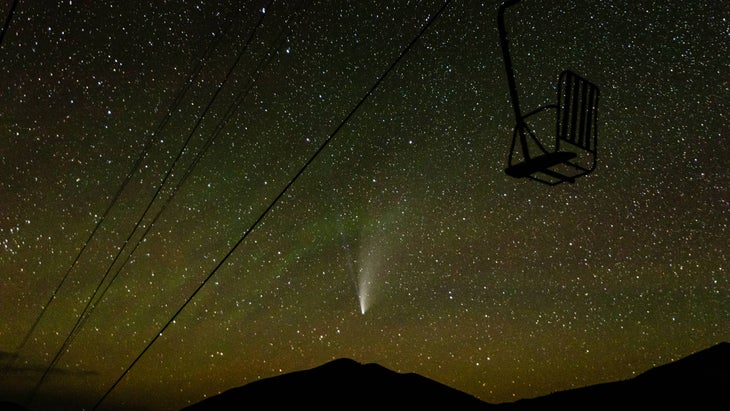
Dark Sky-certified Central Idaho Dark Sky Reserve, an area of 906,000 acres (1,416 square miles) which includes both the towns of Ketchum and Sun Valley, is one of the last large areas of natural nighttime darkness left in the country. The core of the reserve encompasses parts of three separate designated wilderness areas.
What It Takes to Earn Dark-Sky Designation
As part of the reserve, both Ketchum and Sun Valley have been subject to ordinances set in place in 2017 that govern current homes and infrastructure and future development, public outdoor lighting, and holiday lights. All of DarkSky’s certification programs are grounded in its five principles of responsible outdoor lighting: useful, targeted, low level, controlled, and warm colored. In layman’s terms, as DarkSky senior communications manager Drew Reagan said, “When it comes down to it, a visible Milky Way most nights of the year is what we’re looking for.”
While the town of Sun Valley, where the Sun Valley Resort is located, is not a certified DarkSky community, it is beholden to the same standards as one, given that it’s located within a DarkSky preserve. This put the resort in the perfect position to earn DarkSky’s first resort certification through their Approved Lodging program, which launched in 2023 but added resort-specific certification this year.
To receive the certification required, the Resort conducted a thorough inventory of all lighting on the property, as well as presenting active or future demonstration of incorporating educational components and habitat protection. A site inspection during the application process, as well as future filed annual reports, ensures that any DarkSky-certified entity remains compliant. In terms of education, the resort recently built a new toy store with a DarkSky-themed room and items for sale, such as telescopes and star guides, with information on how guests can experience the reserve.
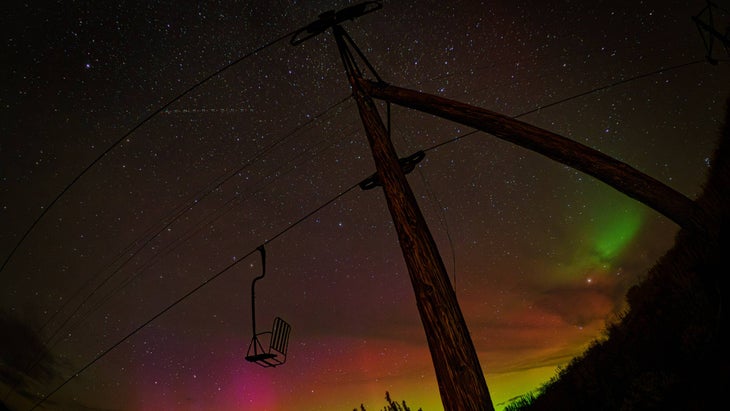
This certification is not only an example of how a world-class resort and environmental stewardship can coexist but also a boon for Sun Valley, considering the rise of astrotourism. Visitors flocked to the area in August 2017 for the total solar eclipse, owing to its open, clear skies. This new designation will surely bring even more astrotourists to the area, a revenue avenue not to be scoffed at as more and more ski resorts find themselves needing to pivot away from reliance on shrinking ski seasons.
“Some of the prime times to view the night sky are in the fall and spring, so being able to activate during those shoulder seasons I think will be really great,” said Sun Valley Resort’s sustainability manager Betsy Siszell.
Disappearing Dark Skies
Astrotourism can be a double-edged sword, according to Reagan, since experiencing the night sky creates more advocates for Dark Sky’s missions, but more visitation often invites more light pollution. “Responsible astrotourism is really important,” Reagan says. “A lot of people are flocking to these experiences because light pollution continues to grow and more people live under light-polluted skies and are experiencing seeing the Milky Way for the first time.”
He observed that our night skies are likely heading into an era of potentially rapid change. With satellite proliferation and new technologies like Reflect Orbital (which builds satellites with in-space mirrors to reflect sunlight back to Earth at night), he believes fear that the night sky will change is driving more people to experience the skies and advocate for preserving this cultural heritage.
He’s quick to point out that DarkSky is not against lighting or innovation—rather, DarkSky advocates for responsible lighting (like those that restrict upward-directed light, avoid glare, utilize dimming, and minimize blue light), hence the stringent criteria for receiving one of the organization’s certifications.
Sun Valley Resort’s first official astrotourism event as a DarkSky-certified resort, Stars Over Sun Valley, will take place August 12. Guests take a sunset gondola ride up Bald Mountain to the historic Roundhouse, located at 7,700 feet, to enjoy dinner, drinks, and an immersive astronomy program led by experts and to view the Perseid Meteor Shower.
While the event has already sold out, it’s a good omen that these kinds of events in the future will be in high demand. In addition to providing guests with guided stargazing experiences and astronomy-focused events, Siszell says there will also be free events, and guests are encouraged to visit some of the resort’s properties that offer great viewing of the skies, such as Dollar Mountain Lodge, Trail Creek, and the Roundhouse on Bald Mountain.
Of course, the Sun Valley area abounds with numerous trails, lookouts, peaks, open fields, and campsites for any and every one to enjoy this public amenity. “The stars are for everybody,” Siszell said. “We’re looking forward to continuing to use the incredible venues at the Resort to show people our incredible night sky.”
Hayden Seder has spent most of her life living in Ketchum, Idaho, enjoying the stars throughout outdoor adventures. Her stories about the outdoors have appeared in Backpacker, Climbing, Freeskier, and more.
The post Sun Valley Resort Just Became the First DarkSky-Certified Ski Resort in the U.S. appeared first on Outside Online.
About The Author