The Grand Canyon’s Mooney Falls Are Taller Than Niagara—and More Dangerous. Here’s How to Hike Them.
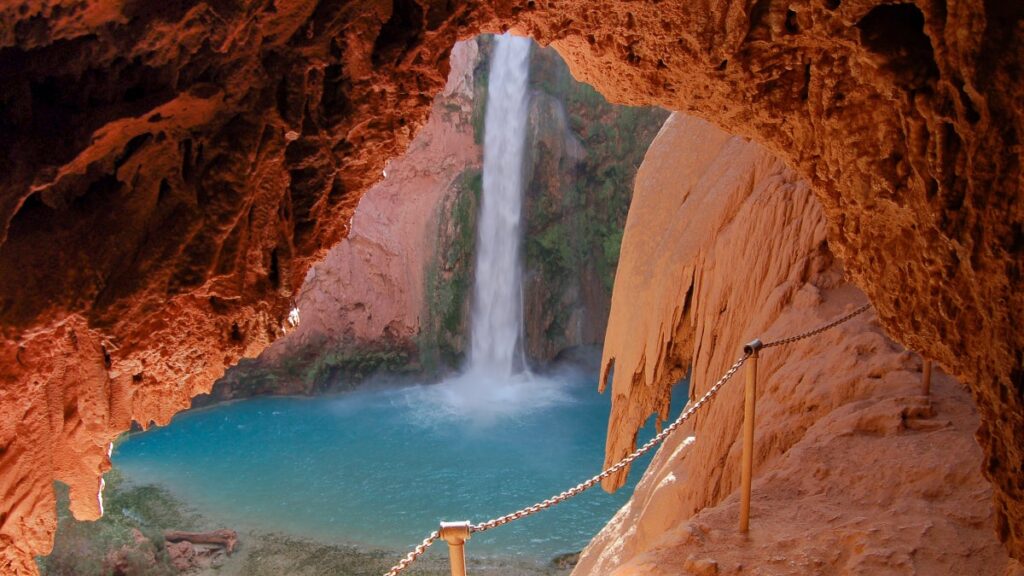
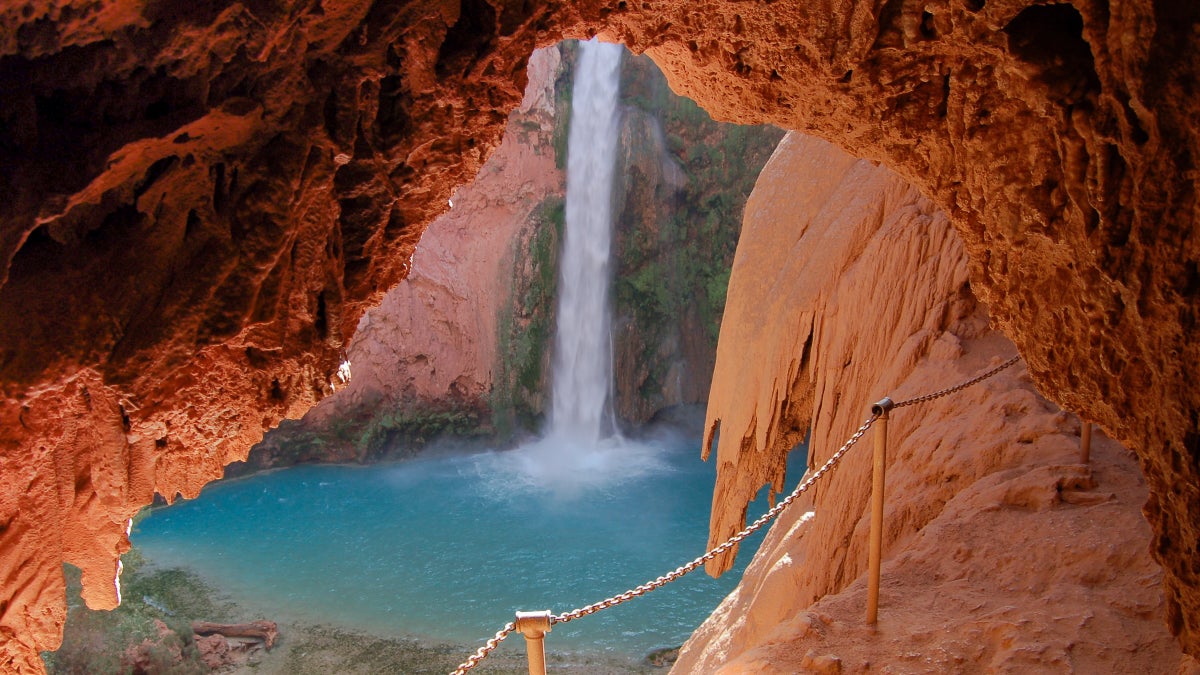
I’m terrified of heights—that’s why I made it a point to hike Mooney Falls, a cascading 200-foot-tall waterfall descending deep within the limestone walls of the Grand Canyon.
Make no mistake, my fear rarely prevents me from sending it, but this travertine waterfall gives pause to even the most sure-footed explorer. Towering higher than Niagara Falls, Mooney requires climbing through wet tunnels, descending across slick chains, and clambering down rickety ladders. And then there’s the hike into the canyon.
Mooney Falls is located on the Havasupai Indian Reservation in Arizona. To get here, you need to plan. For starters, it’s an 11-mile hike from the Hualapai Hilltop trailhead on the rim, and the entire journey requires an advanced permit totaling around $450. Permit sales typically open in February each year and can sell out within minutes of being posted.
I visited Mooney Falls in June 2026 during a heatwave and was blown away by the gushing, turquoise waters that dramatically contrast with the deep desert reds of the Grand Canyon. The falls are located a couple of miles downstream from Havasu Falls and, in my opinion, are much more impressive. Swimming in the pools feels more like the South Pacific than the American Southwest.
But getting down to the pool is not for the faint of heart.
The Descent Involves Navigating Tunnels, Chains, and Ladders
First, you’ll pass through two tight, hand-carved rock tunnels. Below the tunnels, look for a pile of gloves—these will help you grip metal chains pinned directly into the rock. Spray from the waterfall coats these chains in continuous moisture and mud, so be sure to always maintain three points of contact. Past the chains you’ll find the final stretch, a series of wooden ladders anchored to the cliff wall.
All said and done, the climb down takes about 15 minutes, but that’s not to say that it was easy. A side note: If you suffer from vertigo or a nonnegotiable fear of heights, consider skipping this hike. Rescues in Havasu Canyon are complex and can be delayed, so a fall carries with it a severe risk of life-threatening injury.
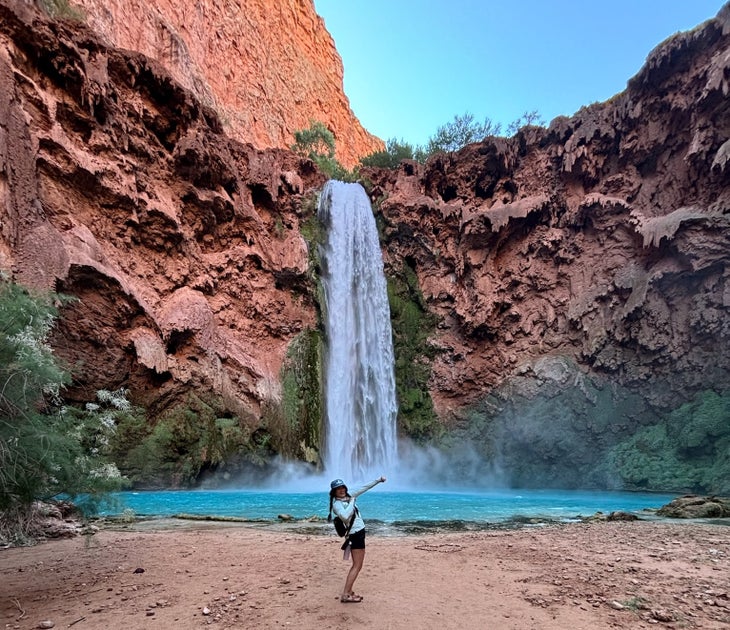
A Precaution Before Swimming at the Base
So you made it down the canyon wall. It’s hot, muggy, and you want to dunk in the pristine, cool waters of the canyon. Visitors can swim there, but remember that powerful undercurrents can suck even experienced swimmers under and have killed people in the past. Do not attempt to swim directly under or behind the falling water.
The hike is sketchy whether you’re afraid of heights or not, and if you need a remote rescue, it’s even sketchier. Injuries and deaths happen. In 2010, a 32-year-old man from Utah was swept under the waterfall while swimming. Two years later, in 2012, a 16-year-old Boy Scout from Utah drowned in the pool while on a trip with his troop. A man fell and broke his back near the falls in 2026 and required a backcountry rescue.
The falls’ earliest recorded fatality was that of D.W. James Mooney, a prospector who fell to his death in 1882 while trying to rescue an injured companion.
Fear of heights aside, would I do the hike all over again? Heck yeah.
The post The Grand Canyon’s Mooney Falls Are Taller Than Niagara—and More Dangerous. Here’s How to Hike Them. appeared first on Outside Online.
About The Author