You Can Still Afford to Live in a Great Climbing Town. Here Are 6.
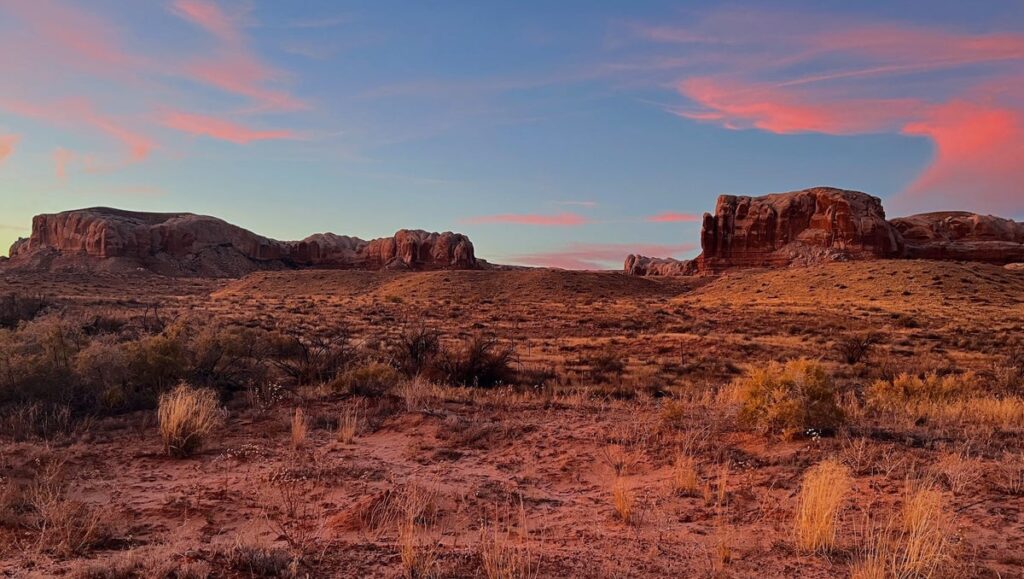
In 2026, can a climber actually afford to settle down without selling their soul or giving up their sport? Sure, you could spend your life living out of a tent, vehicle, or clandestine cave. But many of us, at some point, would like a roof over our heads. The problem is that the places that readily come to mind as climber towns are so dang expensive. From Estes Park in Colorado and Bishop in California, to Salt Lake City, Utah, and New Paltz, New York average home values hover around half a million or more.
Inflation isn’t making the attainment of a permanent place to store your gear and mount your hangboard any easier. According to the U.S. Bureau of Labor Statistics, consumer prices rose by 3.5 percent from June 2025 to June 2026. Energy and gas prices spiked even higher during that time period, with 15.7 and 26.7 percent increases respectively. And no, you’re not imagining it: Climbing gear prices have also risen, due to tariffs on imported gear and inflation.
The Criteria for a Good Affordable Climber Town
So, what’s a skills-rich, but cash-poor climber to do? First, forget the climber towns that are financially out of reach—the Boulders, Flagstaffs, and Bends of the Lower 48. We sought out six towns across the country that met the following criteria:
- Nearby outdoor rock and/or ice climbing areas within six miles.
- Housing prices that fall below the national average of $371,774, according to Zillow.
- For renters, annual housing costs below the national median of $16,956 annually, or $1,413 monthly, according to 2020-2024 surveying by the U.S. Census Bureau.
- An average cost of living that’s less than the current national average of $88,692 annually, or $7,391 monthly, for a household of two adults, according to Ramsey Solutions, a personal finance company.
One more thing we looked for: Potential. Whether that’s the lure of undeveloped routes, the establishment of a climbing gym, or growing room for a more vibrant climbing community, the towns need to be places where we expect climbing to become more important in the future.
Could these be America’s next great climber towns? Pay these hubs a visit, or move there and be the change. And if you’re the gatekeeping type, get in there while you still can, tell no one, and enjoy your hidden gems.
6 Towns With Affordable Housing and Nearby Climbing
We sourced the average home prices below from Zillow, and the annual housing costs and annual cost of living from the Economic Policy Institute’s budget calculator.
1. Bluff, Utah
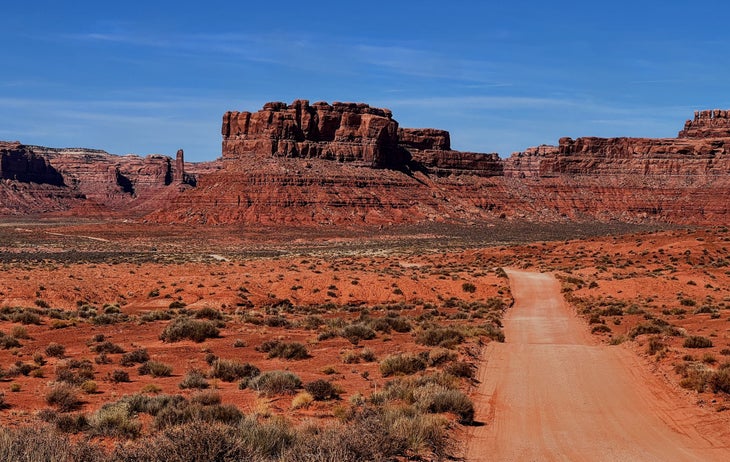
Of the four gateway towns to what remains of Bears Ears National Monument, Bluff is by far the most pleasant. (The other towns include, from north to south, Monticello, Blanding, and Mexican Hat.) Home to about 240 people, the Bears Ears Institute, and a cool eatery called Comb Ridge, Bluff has a small-town feel with a younger, more secular energy. You’ll also find incredible hiking, backpacking, canyoneering, and of course rock climbing nearby. Note that the data here is for San Juan County.
Average home price: $365,780 for San Juan County, which includes Bluff, Blanding, Monticello, and Mexican Hat.
Annual housing costs: $9,480
Annual cost of living for two: $69, 212
Distance to nearest climbing: .4 mile
Type of climbing: It’s just over an hour’s drive to Indian Creek’s endless splitters. Valley of the Gods is a 40-minute drive away, and there are a dozen or so boulder problems and routes right around town.
Climbing gym? Not yet. The nearest gym is in Moab, about a two hours’ drive away.
2. Cañon City, Colorado
Let’s get the fact that the Colorado State Penitentiary is located here out of the way. That was the one thing folks shared with me when I went on my first weekend trip to nearby Shelf Road. But you’ll hardly notice its presence in this small city of just over 17,000 people. Cañon City has come a long way, with a small-town vibe, year-round rock climbing, and a walkable downtown. It might just be the cheapest climber haven in Colorado. Plus, it will soon have its own climbing gym.
Average home price: $334,912
Annual housing costs: $10,668
Annual cost of living for two: $59,913
Distance to nearest climbing: 6 miles
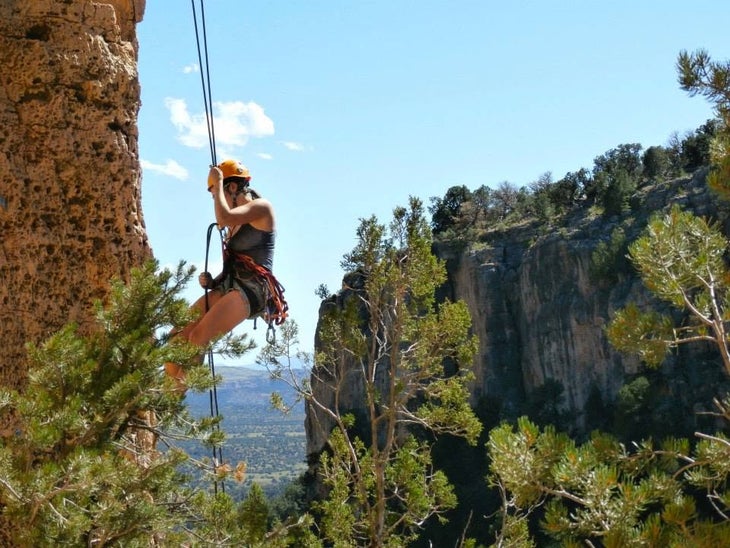
Type of climbing: By far the best nearby climbing is at the limestone sport mecca of Shelf Road, which is 48 minutes away by car. Closer to town, you’ll find abundant bouldering at Four Mile Creek, just a few miles north of town. A variety of climbing also awaits less than a 20-minute drive away at Buckskin Crags—bouldering, sport, trad, and toproping.
Climbing gym? Rock Steady is in the pre-development phase, with a target opening date in 2027.
3. Chattanooga, Tennessee
You can’t talk about climbing in the South without talking about Chattanooga. While it’s no small town, the Scenic City is often described as having a friendly, approachable vibe and a small town feel. But for many of the nearly 200,000 people that call this Tennessee city just north of Georgia home, the real draw is access to recreation, including good rock.
Average home price: $322,295
Annual housing costs: $15,408
Annual cost of living for two: $70,408
Distance to climbing: 2.9 miles
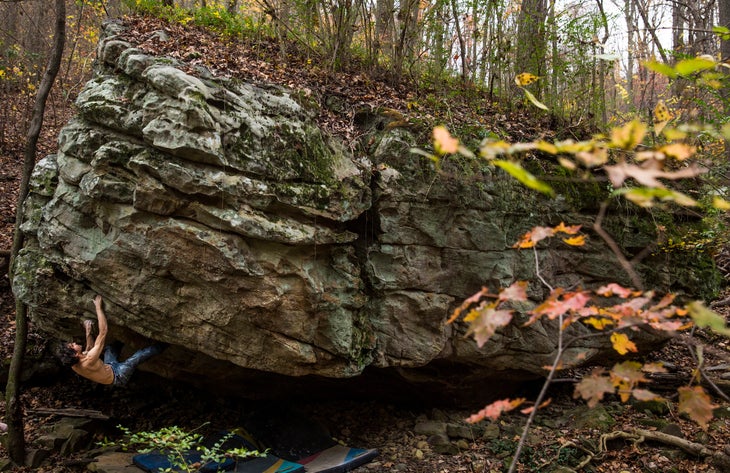
Type of climbing: Legendary bouldering in Wauhatchie Pike and deep water soloing along the Tennessee River, plus many more nearby crags.
Climbing gym? Several, including High Point Climbing and Synergy Climbing.
4. Fayetteville, West Virginia
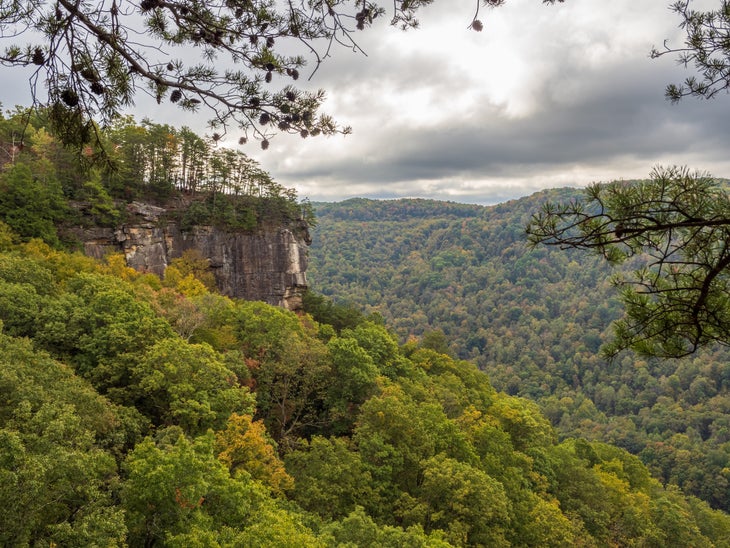
One of America’s more recent additions to the national park system, New River Gorge offers thousands of routes with a very well-balanced mix of trad, sport, and bouldering on Nuttall sandstone. Composed of 98 percent quartz, this sandstone resists erosion, making it amazing for climbing. With just shy of 3,000 residents, Fayetteville is a cool little gateway town to the park—and extremely affordable. Note that the data here is for Fayette County.
Average home price: $203,204
Annual housing costs: $8,088
Annual cost of living for two: $65,725
Distance to climbing: 3.3 miles
Type of climbing: New River Gorge! Nearly 1,500 climbs in the New River Gorge area, including trad, sport, and bouldering.
Climbing gym? Yes, at Gripped Fitness, a small bouldering and board gym.
5. Tucson, Arizona
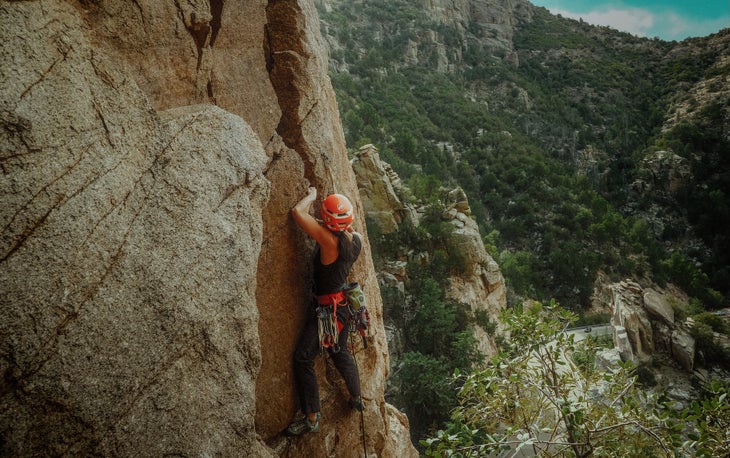
Flagstaff and Sedona are lovely, but head further south for less bougieness, more bang for your buck, and equally ample rock. In town, you’ve got incredible burritos, decent blocs, and the highly lovable Saguaro cactuses, which grow exclusively in the Sonoran Desert. Book it south to Cochise Stronghold, or head high into the surprisingly alpine environs of Mount Lemmon for the real attraction of Tucson. With a population hovering over 550,000, this is by far the biggest city to make our list. But with its modestly sized downtown buildings, orderly grid layout, and inclusive vibe, Tucson often feels more like a small town.
Average home price: $323,949
Annual housing costs: $12,624
Annual cost of living for two: $58,047
Distance to nearest climbing: 5.2 miles
Type of climbing: Over 3,000 trad, sport, and bouldering routes (yes, you read that number right) on granite and gneiss define the climbing at Mount Lemmon, about an hour away. For a more backcountry, rugged experience, sample the 800-some routes at Cochise Stronghold (an hour-and-a-half away), where old school trad and hybrid routes dominate. You’ll also find bouldering areas closer to the city, like Panther Peak and Gate’s Pass.
Climbing gym? Yes, at least three, including Rock Solid Climbing and The BLOC.
6. Winona, Minnesota
This small community of around 25,000 residents right on the border with Wisconsin might just be the next big climber town. Winona has seen promising recent development, with about 40 sport routes at the local Sugarloaf Quarry.
This southeastern Minnesota town also now boasts its own ice climbing park—one of only a handful of ice parks in the country—with 100 routes and counting. The park hosts an ice climbing festival every February.
“It’s really an amazing resource to be able to be at the ice within 25 minutes from your home,” Eric Barnard, a local guide and route developer who runs the park, told Climbing.
Barnard added that there’s the potential for much more climbing if the community can resolve access issues.
“There is a ton of rock in this region that is on private land, but if we can gain access one of these days, we could easily have another 200-plus rock routes in the valley up to 200 feet long,” he said. “But that’s a long battle that we are working on.”
Average home price: $263,864
Annual housing costs: $9,312
Annual cost of living for two: $63,666
Distance to nearest climbing: 3.8 miles
Type of climbing: Sport and ice climbing at Sugarloaf. Plus, more sport climbing about 25 miles away at LaCrosse, Wisconsin, and just over an hour away in Red Wing, Minnesota. In town, there’s also a bouldering park next to the Mississippi River.
Climbing gym? There is a climbing wall that’s open to the public at Winona State University.
The post You Can Still Afford to Live in a Great Climbing Town. Here Are 6. appeared first on Outside Online.
About The Author