People Are Betting Millions on Active Wildfires. Now Congress Wants to Stop It.
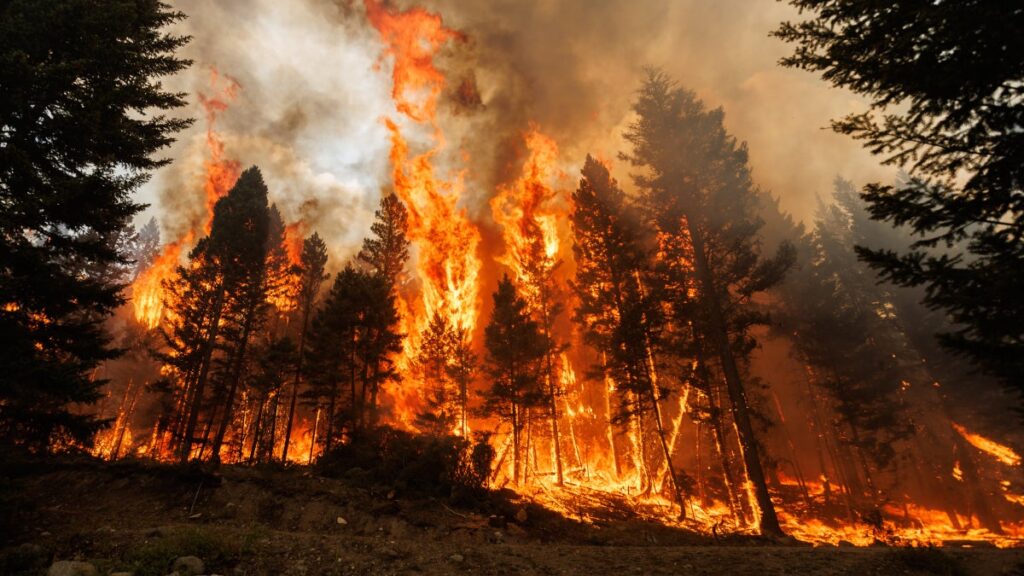
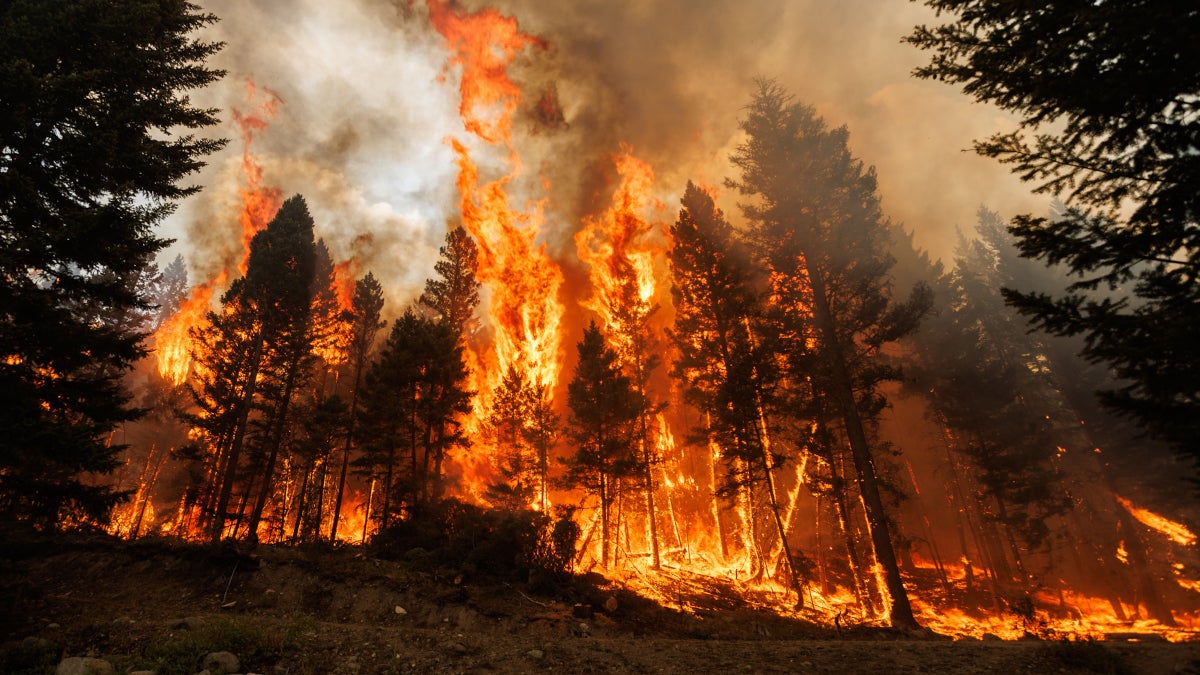
As wildfires prompt evacuations across the Pacific Northwest, and smoke blankets much of North America, some Americans are reportedly placing online bets on how large the blazes will grow, when they’ll be contained, and how much damage they’ll leave behind.
Lawmakers warn that gambling on wildfires creates a dangerous incentive for arson.
On August 3, nine U.S. senators including Alex Padilla and Amy Klobuchar wrote a letter to Michael Selig, the chairman of the Commodity Futures Trading Commission, the regulatory body overseeing derivatives markets, pressing regulators to stop the growing online practice of gambling on wildfires. The senators argued that wagering on active wildfires could tempt people to interfere with firefighting efforts—or even commit arson.
“No matter how small this chance is, it should never be tolerated,” Oregon Democratic Senator Jeff Merkley, who co-signed the letter, told Outside. “This falls under the same no-man’s land for betting occupied by wars and assassinations.”
The online prediction markets Kalshi and Polymarket both allow users to wager on a wide range of natural disasters. Outside contacted both platforms for comment but did not receive a response.
Prediction markets are online platforms where users wager real money on the outcomes of future events such as elections, sporting events, and, increasingly, natural disasters. On sites like Polymarket, users bet on yes-or-no questions, such as whether a fire will reach a certain size or be contained by a specific date.
Winning bettors are paid out when the market closes. Polymarket’s main competitor, Kalshi, is legal in the U.S. but only lets users bet on whether natural disasters like earthquakes or hurricanes will happen, and it doesn’t cover fires at all.
As of August 6, 2026, neither site has any active wildfire betting opportunities.
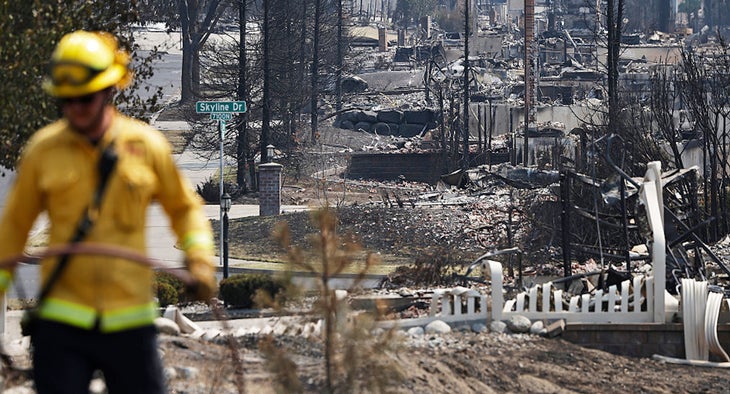
Wagering on wildfire gained attention in January 2025, when the Palisades and Eaton fires tore through Los Angeles. As the fires raged, online bettors wagered on a wide range of outcomes, from the extent of the destruction to whether anyone would be arrested for arson. The fires killed 31 people and destroyed more than 16,000 homes.
During those fires, the financial stakes for online bettors topped $1.2 million on Polymarket, according to Jamie Pietruska, a history professor at Rutgers University. That’s the most recent figure available, she told Outside, because the markets closed once the fires were extinguished.
Until early August 2026, prediction market platform Wyldfyre.io also allowed people to bet on wildfires. The website even published a slogan, “You can’t predict fire, but you can trade on it.” It’s since been shut down.
Online Betting Poses Arson and Insider Trading Risks
Wildfires have burned more than 630,000 acres in Washington this summer, while Oregon is having one of the worst fire seasons in its history, with more than two million acres burned. California, which has largely avoided major fires so far in 2026, has sent firefighters and equipment to both states. Cosigners of the letter warn that allowing betting could incentivize arson and tempt bettors to interfere with firefighting operations. They also argue that it could encourage insider trading between those involved in firefighting efforts.
“I think the potential for abuse is rampant and could lead to serious consequences,” Patrick Wright, director of California’s Governor’s Wildfire and Forest Resilience Task Force, told Outside.
Wildfire season already means trail closures, campground evacuations, and long stretches of trail shut down for weeks. One 2025 working paper estimated that wildfire smoke costs the outdoor recreation industry roughly $21 billion a year. Betting markets let people wager on the events that shape those recreation decisions, and fire officials like Wright worry they could change how agencies fight and prevent fires—and that arson is just the tip of the iceberg.
“We shouldn’t be creating markets about human losses,” Wright said. “It just could lead to a lot of abuses and unintended consequences. There are the obvious things like arson, but even beyond that, how fires are fought, how they’re prevented, what projects are chosen, what investments are made and not made. The list is enormous.”
Markets could also put public opinion at odds with the judgment of professional fire managers, according to Write.
“The last thing we want is fire managers being second-guessed by prediction markets,” he said. “If firefighters are saying ‘this is a priority area,’ but your prediction markets are saying, ‘no, this other area is where all the bets are being taken,’ that’s the last thing firefighters need.”
Who Regulates Prediction Markets?
The federal government regulates prediction markets, so individual states can’t establish rules for online betting as they do for traditional gambling. As regulations move forward, lawmakers say that recently proposed regulations need to explicitly address betting tied to natural disasters.
“There is something repulsive about people betting on others’ misery, like the intensity of a hurricane or the number of homes a fire will burn or the location or the number of fires; or the acres burned,” Merkley told Outside. “But when it comes to fires, it is immoral to create any possibility that firefighting might be influenced by bets made on a prediction market.”
Without adding explicit language banning betting on natural disasters, the senators wrote that betting on wildfires could spread as prediction markets become more commonplace.
Sens. Alex Padilla and Adam Schiff of California, Jeanne Shaheen of New Hampshire, Jacky Rosen and Catherine Cortez Masto of Nevada, Martin Heinrich of New Mexico, Ron Wyden of Oregon, and Amy Klobuchar of Minnesota also signed the letter. All represent Western or fire-prone states.
The post People Are Betting Millions on Active Wildfires. Now Congress Wants to Stop It. appeared first on Outside Online.
About The Author