My 99-Year-Old Grandmother Built a Hidden Empire Around Flannel. Then She Lost It All.
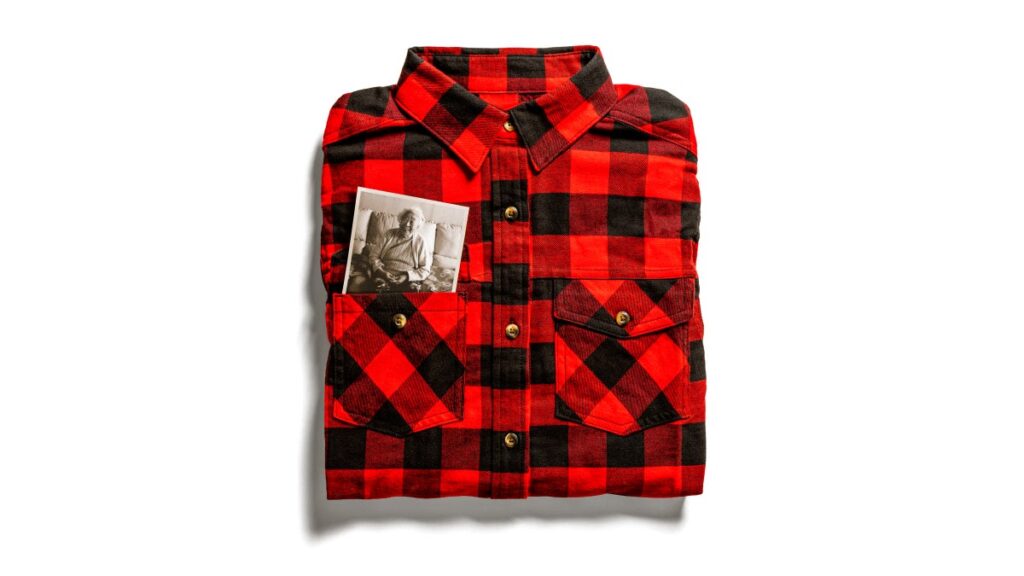
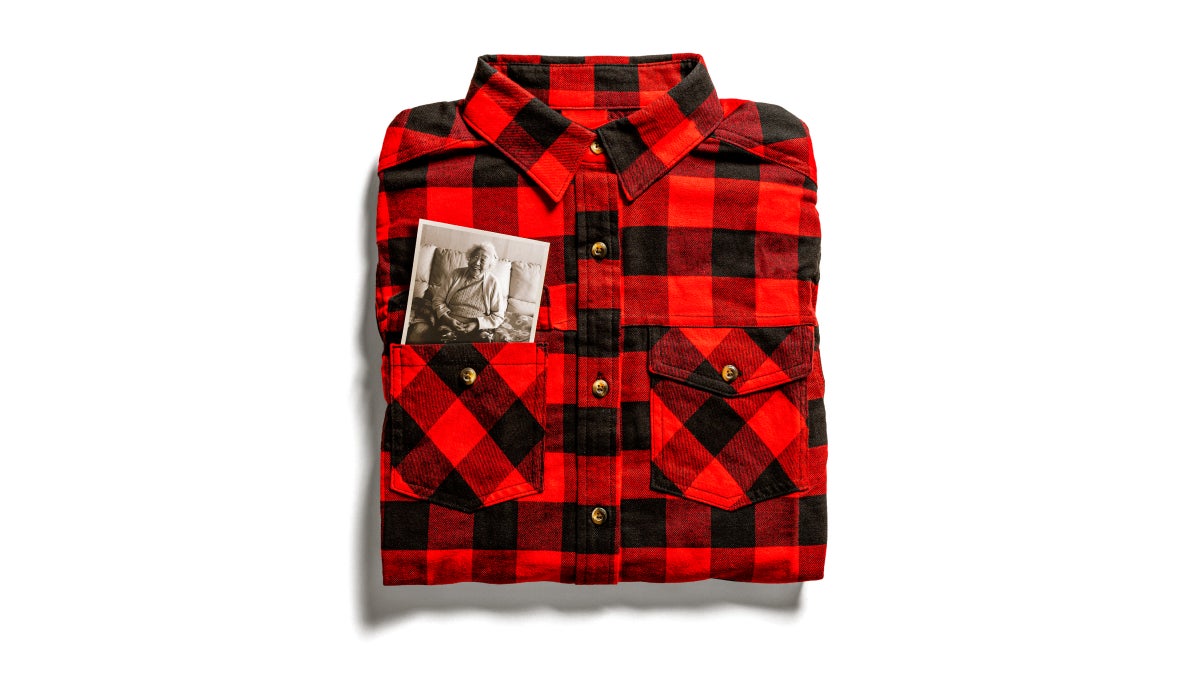
When I was a child, visits with my Korean grandmother always began with the same ritual. She would place my left hand on her lap and trace the lines in my palm with her index finger, before delivering a prophetic verdict about my future. She’d tell me that when I became an adult, I would be a cheapskate. Apparently, the so-called “money lines” on my left palm were unbroken. “Your pockets won’t spill money, unlike your grandfather,” she would say.
After reading my palm, my grandmother would turn her attention to my shirt. Starting with the threads, she’d run her fingers along the seams and the stitches, analyzing the fabric for some soothsaying quality. Her hands would rub the material, and she would look at it closely. After pausing for a few seconds, my grandmother would announce her findings: “This shirt has good cotton!” or “I’ve never seen this weave!”
I lived with my family in Arkansas, worlds away from Seoul, which is where my parents had been born and my grandmother lived. Sometimes my grandmother would visit us in the United States, and sometimes we’d fly halfway across the globe to see her in Korea. I remember thinking that her fixation on fortune-telling and garment analysis was normal. I assumed that, across the U.S., grandmothers were greeting their grandchildren by gifting them candy and presents, before sitting down and studying the microfibers in their sweatshirts and blouses.
As I got older, I learned that my grandmother’s hyperfixation on fabric was the product of her younger adult life in Korea. According to my family’s fuzzy family lore, Grandma had once managed a textile factory. Well, no, maybe she had actually owned it. Did she simply work at the factory? Facts were hard to come by. Different family members visiting from Korea would tell pieces of Grandma’s life during their stays in Arkansas. And over the years, Grandma’s history in the garment industry became a source of my curiosity.
I’m now in my early forties, and my grandmother is 99. After years of hearing these mysterious stories, I set out to discover the truth of her connection to the garment industry. During one of my trips to Seoul, as we sat on her couch watching professional wrestling on TV—her favorite pastime—I asked my grandmother questions, in my second grade–level Korean, about her career in textiles.
More than half a century ago, she told me, she and my grandfather had owned a textile factory in Seoul that employed more than 50 people. They had helped pioneer the industrial production of a fabric that stills defines the style and culture of the outdoor industry: cotton flannel.
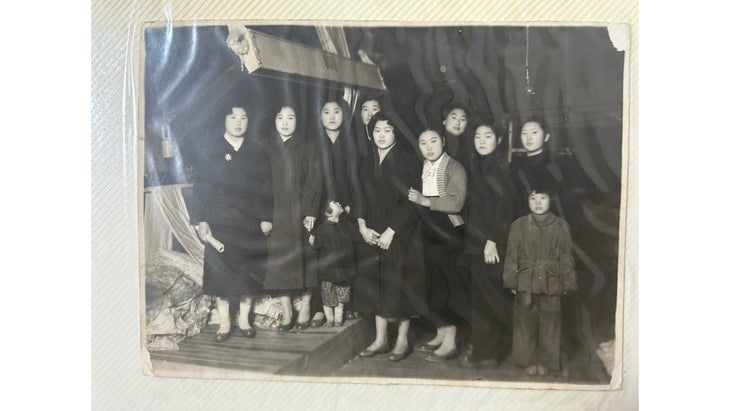
I wanted to know more, but my lack of Korean fluency kept me from truly interrogating this history. So, I enlisted my cousin, Spring, who speaks fluent Korean and English, as well as my sister, Mary, and my own mother to uncover the real story. Over the course of two years and a half dozen interviews, we interrogated Grandma, full name Sonia Shin, but whom we affectionately call “Hal-money” (grandmother in Korean). She told us stories, recounted memories, and helped us understand what her life was like more than half a century ago. We pieced together the tale of how she and my grandfather built a small empire of industrial flannel production in postwar Seoul. And then, how she lost it all.
Flannel is one of the most popular fabrics amongst outdoor enthusiasts—just try walking into an outdoors store without spotting a flannel shirt at any time of year. Over time, the soft, plaid, button-down shirt has become the unofficial uniform for those of us who work in the outdoor recreation industry. It’s the stuff of cozy pajamas and warm camping blankets, the foundation of the lumbercore fashion movement. Its cultural significance extends far beyond the campfire: flannel is synonymous with Kurt Cobain and grunge rock; with Snoop Dogg and nineties hip hop; with ranchers, tech bros, and city dwellers seeking blue-collar authenticity.
Despite its ubiquity, few wearers of the material ever stop to consider what flannel actually is. Most people associate it with colorful plaid designs woven into wool, but not all flannel is plaid, nor is it wool. The term “flannel” refers to any woven fabric, usually cotton or wool, that’s been brushed until it becomes fuzzy and extremely soft.
Imagine taking a metal brush and scrubbing down a spot on your khaki pants until a thin layer of fuzz forms on the surface. That layer is called a “nap,” which is made up of loosened fibers that, due to the brushing, now stand on end as a soft and warming tuft. The process of creating flannel makes garments warmer and softer.
Industrial textile factories use machines affixed with fine metal bristles to scratch fabric as it passes through the device, raising the nap evenly across thousands of yards of material. The technique used to make flannel is centuries old. Flannel’s origins have been traced to 17th-century Wales, where textile workers brushed fabric made from sheep’s wool into a material that was warm enough to survive the region’s wet, cold winters. Originally done by hand, the technique eventually became mechanized, and it spread across Europe during the industrial revolution. Cheap cotton from North America eventually flooded the European market in the 19th century. Mills quickly swapped out wool for cotton. Amid this evolution, cotton flannel became a fabric for working-class Europeans.
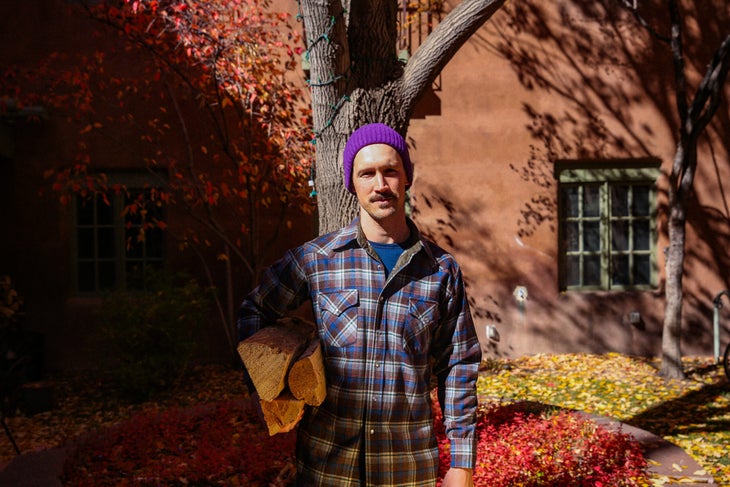
In the U.S., flannel’s connection to the rugged outdoor lifestyle came from Woolrich, the Pennsylvania-based company founded in 1830. The company introduced its red and black buffalo check shirt in 1850. The brand was a hit with hunters, loggers, and trappers, and the design became the official shirt of the lumberjack.
Steven Kurutz, author of American Flannel: How a Band of Entrepreneurs Are Bringing the Art and Business of Making Clothes Back Home, grew up 25 miles from Woolrich headquarters. Flannel was the uniform of the town, even on dressed-up days. His grandfather, a sheet metal worker and fisherman, owned a fancy flannel coat that Kurutz still wears today. “Everyone had one,” he told me.
Kurutz’s explanation for its popularity is that flannel lends a quiet humility and authenticity to those who wear it. The style, he says, has never belonged to any one kind of American. “Flannel cuts across races,” he reminded me. “It’s American, but not necessarily a white person’s garment.”
America’s production of flannel garments shrunk as the textile industry increasingly sought cheaper labor abroad. In 1980, approximately 70 percent of the clothing Americans wore was made in the U.S.; today, it’s about 2 percent, Kurutz wrote. The lion’s share of our garments is instead woven in massive factories in China, Vietnam, Bangladesh, or India.
The Woolrich mill, the oldest continuously operating one in the country, closed at the end of 2018 after the brand moved production overseas. Kurutz calls this a “quiet tragedy” in his 2024 book.
“It’s a deeply American brand, and now it’s not made here, not headquartered here,” he lamented. These days, the brand’s corporate headquarters are located in Italy.
As I spoke with Kurutz, my grandmother’s connection to flannel echoed in my mind. Her story seemed to become more compelling with every historical data point he explained. Decades before American textile manufacturers shipped their operations overseas, my grandparents built a flannel empire out of a half-burned factory in Seoul.
The post My 99-Year-Old Grandmother Built a Hidden Empire Around Flannel. Then She Lost It All. appeared first on Outside Online.
About The Author